Over
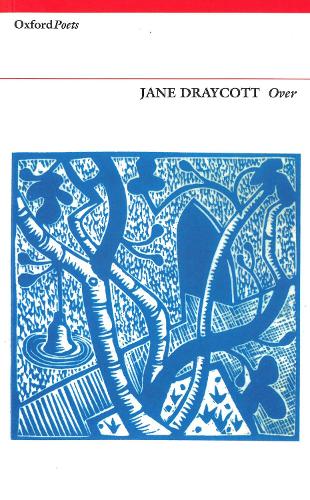
Over
paperback
Published:
28 April, 2009

Popular Books by Jane Draycott
View All Books by Jane Draycott
Description
Prizes
Short-listed for T.S. Eliot Prize 2009
More Details
| Type | Book |
|---|---|
| ISBN13 | 9781903039922 |
| ISBN10 | 1903039924 |
| Number Of Pages | 80 |
| Item Weight | 68 g |
| Product Dimensions | 135 x 216 x 8 mm |
| Publisher / Reseller | Carcanet Press Ltd |
| Format | paperback |
Media Reviews
When poetry is described as 'quiet', this may mean that it lacks a sense of musical order and consequence, as is true of the quietly prosy work that is widespread in magazines - the decent, earnest kind that tends to be all language and no song. On the other hand, quietness may be a power, a precise instrument for framing and concentrating the attention of poem and reader. Those who enjoyed Jane Draycott's 'Tideway' poems, deriving from her work with the Thames watermen in her previous book, The Night Tree (2004), will know how well she evokes the otherness of the underwater river-world, its shifts, silences, doorways and vaulted depths, and it is in this sense that the word 'quiet' should be applied to the chords and modulations of Draycott's eerie and beautiful poems. She listens, and therefore so do we.
'both austere and beautiful'
What Draycott sustains into her new book, Over, is a sense of intimate, imaginative apprehension combined with the knowledge that much of the world lies beyond reach, whether because of its pastness or because loss is a condition of understanding it. In 'The Square', a woman is seen looking out from a window: 'In her sleeveless linen dress she is beautiful, / a cool candle in the vast dark glass, / like my mother in a time before I knew her.' In the image as Draycott reads it in the remainder of the poem, it is mortality which grants both dignity and autonomy to this distant figure, so that the conclusion, 'She isn't interested in me any more' is affirmation of love rather than a mawkish protest.
This is both austere and beautiful (and near-impossible in everyday life). Characteristically, Draycott presents the human figure in transition from selfhood to artistic representation; this is done to poignant and humorous effect in 'The Girls' Book of Model Making', where she shows how:
Girls then wore their hair in shining helmets
and their brothers rushed across the lawn to swim
out from the shadows, from the stifling willows,
between the wars.
This 'outdated annual' and its lightly classicised hack illustrations enable Draycott to recall the conclusion of the poem's background model, Keats's 'Ode on a Grecian Urn', and to suggest that rather than immunity to the claims of time, it may be the very vulnerability of these imagined young people to war and death that makes them memorable, charged with life even by the illustrator's modest art.
The quiet persists, but clearly for Draycott art is not a place of retirement: the space of contemplation is surrounded and leaned on by all that would abolish it, and the process of contemplation cannot be po-faced either, since it has for example to cope with the sense of nightmare comedy revealed on top of a latter-day Magic Mountain: 'This is the hour in the high alpine restaurants / when lovers of many years' standing / wonder if they have ever existed at all' ('After the Meal'). In the context of the poem, you need to be wealthy to eat there, so that the horror of dissolution is an insult delivered by your money, on behalf of what it cannot govern. This is a fairly loud example by Draycott's standards, but she is always delivering us back into the presence of history and power.
'...the effect is chilling and exhilerating...'
The second half of Over contains 26 poems taking their titles from the international phonetic alphabet. In the hands of some poets, such a project would be a cause for dread; but Draycott has a light touch, as well as the indispensable virtue of never being less than interesting, as indicated by 'Charlie', which deals with the everyday metaphysics of a cocaine smuggler: 'Above the snowline even your hair sings. / You turn again to almost perfect crystal, / you are beyond the shadow of a doubt.' 'Lima' shows Draycott's gift for painterly compression: 'In Europe the interior has become a genre / in its own right, light from outside streaming / like silver in through the windows of merchants, / the whole world held like linen before the press.'
You might think Vermeer's world has been bled dry poetically until you encounter Draycott's measured tone, which knocks a textbook recital slightly off balance to show capital taking firm hold of culture. As she goes on to include optics and mapmaking, the effect is chilling and exhilarating, like the history poems of a very different writer, the late Ken Smith. Like Smith, Draycott purges her work of the knowingness that often short-circuits poetry. She goes to the trouble of imagining things for herself, and thus for her readers - whom she trusts not to need or want everything, including the correct moral stance, to be explained. She invites readers to immerse themselves, to spend time until the world refreshes itself. However inhospitable the results may at times prove to be, Draycott affirms the pleasures of the imagination as well as its duties: as she puts it in 'Quebec', 'the solitary owl in the darkness, / the beauty of the ice-journey, its flame'.
TS Eliot prize
The Sunday Times review by Alan Brownjohn: a preview of the 10 shortlistees for the prestigious poetry prize
The annual 10-book shortlist for the £15,000 TS Eliot prize can be re-lied on to provide an intriguing mix of obvious candidates and surprising outsiders. But the experienced poet judges for 2009 (Simon Armitage, Collette Bryce and Penelope Shuttle) have added some particularly wild cards to the four choices already delivered to them by the Poetry Book Society. (The PBS makes a quarterly choice for its members, and those four titles automatically go on the shortlist.)
Last year saw admirable new collections from Andrew Motion, Don Paterson (winner of the 2009 Forward prize) and Peter Porter. None is among the Eliot 10. Sharon Olds is; but her marvellous fellow-American John Ashbery remains oddly beyond the range of the judges. One of the PBS choices, Alice Oswald’s Weeds and Wild Flowers (Faber £14.99), presents a problem. The poet described it as 'two separate books', her poems not relating specifically to Jessica Greenman's prominent, beautifully exact etchings. The poetry has a weird charm (Snowdrop is 'A pale and pining girl, head bowed, heart gnawed'), but lacks the boldness and range that won Oswald this prize with Dart in 2002.
Jane Draycott's Over (Carcanet £9.95) has an emotionally charged yet cryptic style that is at its most approachable in poems concerning parenthood or marriage (the excellent Picnic), while the raw confessional mode of Sharon Olds's One Secret Thing (Cape £10) recalls Sylvia Plath and Anne Sexton in the 1960s, with sequences about war, adolescent awakening, or (the best) her mother's second marriage and death.
To refer to oneself in the third person, as politicians and footballers sometimes do, suggests a self-image both lordly and insecure, at odds with itself. Poets too have their version of self-decentring, in the frequently adopted strategy of displacing a narrative 'I' onto the second person. In 'Sky Man', the opening poem of her third collection Over, Jane Draycott has a different approach again. The other, which might be the self (a mirror is involved), contemplates the either/or of alterity and proceeds by determinate negation before an eventual second-person identification. The sky man:
Waits in the sky mine upriver.
You are stone and that chair is only a chair.
No change in the face of the mirror.
Not you. Not you.
Over is a volume of journeys and midpoints between here and there, of the 'exact half-way' moment of midsummer, while 'to and fro along the fair miles / the fascinations travel'.
Cockaigne, the fabled land of plenty, 'begins to look a lot / like home', even as the voyagers going up the Orinoco pursue a chimera ( 'There is no gold'). The sense of identity is prone to sudden fade-outs, as when 'lovers of many years' standing / wonder if they have ever existed at all'. Sometimes the back-and-forth between the 'me' and 'you' turns fractious, as in 'Concourse', which sounds like a metaphysical lovers' tiff ( 'What are you going to do about it? // Get in close. You made this world.'). If thresholds abound, Draycott recognizes the all-too-seductive powers of liminal zones. Life can seem permanently elsewhere, to paraphrase Milan Kundera, and many of these poems grapple with a drama taking place offstage, as when 'Night Museum' unveils its 'legendary shroud': 'almost the body, the thing itself outstretched / but with the life withdrawn, back into the woods'. The lighting throughout Over is positively Vemeeresque, and the workshops and merchants' windows of a poem such as 'Lima' recall the lapidary clarities of Derek Mahon's 'Courtyards in Delft'.
Pondering the time-lag involved in the motion of light, Flann O'Brien's mad scientist De Selby proposed that with a sufficiently powerful telescope the viewer might see him or herself as a baby, and possibly before. 'Lookout Mountain' finds Draycott proposing something similar, explotiting 'the speed / of the answering light' in a mirror to discover 'Your younger self shimmering'. With the eyes forever on the lookout, there is a risk not just of déjà vu but 'déjà déjà vu', as Draycott calls it in 'Echo'. Yet if some things cannot be let go, it is usually for elegiac reasons. A fine translation from the Middle English poem Pearl strikes a note of luminous elegy, and elsewhere a number of poems written in memoriam summon worlds of vanished light: 'Fear nothing. It is not over yet. / Soon we will have a whole city of light'.
Amid the constant journeyings of Over ( which were a feature, too, of Draycott's last collection, The Night Tree), it can be difficult to pin down the author's personality: without being exactly featureless, Over is an undeniably evasive and quicksilver performance. Paradoxically or not, it is when Draycott insists most strongly on the fictional nature of her storytelling that these poems are often their most humanly true. 'One thing my father never did / was slip out under the mimosa trees', begins the final poem, 'Zulu'. In the same way that the titles of the final sequence, based on the international phonetic alphabet, often have an elliptical relationship with their subject matter, 'Zulu' is a poem about the author's father which proceeds entirely by negation. The long last sentence begins with a 'Nor' that cancels all that follows, the description of the father's travels, and how he would return home and: 'come in and play for hours / on our old Broadwood, his fingere / truly a river in spate around the house / and out into the desert of our street, / named for the small hill on which we lived'.
None of this happened, in other words; but whether their subjects are fictive or real, these poems are messengers bringing 'news from another place', in writing that is assured, sophisticated and moving.
Autumn 2009
'Pass', from Jane Draycott's third collection Over, is . . . about the vulnerability of young people and their parents' sense of protectiveness. Parents of a grown up daughter out driving the car alone for the first time at night 'try in vain / to visualise your course, the unlit shipping lanes, / the shoals of stars'. A child's impending adulthood and independence are, like the water through which a submarine might move, alien elements into which her parents cannot see or follow. It's perhaps too neat a poem, but it also illustrates the difference between D'Aguiar's imagined listener - an impassioned, demanding public - and Draycott's audience of one. T S Eliot described poetry as 'one person talking to another', and her work is certainly that: direct, tender, with the sense of special privilege to be had in private conversation, all consummately made for the speaking voice. 'Sky Man' is a better example, with its gentle refrain - 'Not you. You' - singling out the reader, drawing him or her into a landscape of sound:
Waits at the wilderness
edge of your leaf eye.
Cloud mine. Your sky.
Palm fringed. Your eye.
Not you. You.
This is not so much talking, perhaps, as whispering in your ear. The title of the book, Over, refers to the end of a dispatch in radio communications, and voices and messages are everywhere: a mysterious woman glimpsed at a window across a crowded square 'in her eyes is saying It's too late now'; picnickers on a hillside 'lay out / the argument and patterning of our feast'. Like a sensitive, as they used to be called, Draycott is alert to all the nuances and echoes, the subtleties of light and tone, the second-by-second portents and myths that constitute our sense of the world.
'Over' is also the title of the final sequence of poems prompted by the international radiotelephony spelling alphabet - 'Alpha', 'Bravo', 'Charlie' and so on. The schematic structure presents the poet with an opportunity to be even more creative than usual in order to escape, Houdini-like, from her own imaginative confinement. The poems that make up 'Over' turn constantly in unexpected, intuited directions, like someone following blind the sound of birdsong through a wood. What is it, exactly, that connects all the images found in 'Whiskey'?
Deep-sea flame fish
calling, the heart
harpooning. Something
in the dark is flashing.
Gold in the blood,
everything you know.
The fire on the little sandy beach.
The bear at the window.
The glamour of the wilderness, solitude, fleeting epiphany, passion unleashed? But Draycott is too canny to romanticize such things for long. When the real threat comes in the final line it does not seem misplaces: 'No one escapes'. The whole sequence seems to teeter on the edge of disaster, as if the wild frontiers of 'Yankee' are always ready to reclaim the civilisations being depicted, with their 'lens-grinder's glass', 'the ships, the idols, the distant city of mist'.
Over contains an excerpt from 'Pearl', Draycott's translation of the Middle English spiritual poem (due to be published spearately by Carcanet in 2010), which manages to energize the Middle English love of haevy patterning and alliteration into something plausibly contemporary without sacrificing its character. The voice of the poem has lost its 'spotless pearl', but as it mourns this loss it also tries to find some solace in it:
Although this watching sears my heart
and wrings the wires of sadness tighter,
the song this silence sings to me
is the sweetest I have heard.
Like most poems in the book, 'Pearl' has an enviable effortlessness, a restraint, which is neither coy nor unambitious but the mark of a poet determined to explore without violating the language she has so carefully chosen.
'A breath of fresh air.'
The original article can be found here.
The ‘in-between space’ has been trodden to exhaustion in contemporary poetry; it has also, though once entrepreneurial, descended into easy game. Having multiple identities, a foot in every camp, poets need not commit to anything; they need not even say anything (Brownlee’s horses with their weight shifting from foot to foot have a lot to answer for). Over, the third collection from Jane Draycott, is an exploration of in-betweens; it is also, however, a breath of fresh air, in that it dares to assess limbo spaces rather than merely squatting in them.
Over aims at taking stock: it’s a book of middle age, both public and personal. The opening poem, ‘Sky Man’, probes the gaps between expectation and reality in viewing the mirror image of the self (‘Not you. You’), and aging is a recurrent theme; it is also one that Draycott finds perplexing, and in very particular ways. ‘Sky Man’ works by increments: the meaning or general shape is not apparent from a quick first read, after which one may go back and brood on the details. Rather, the poem proceeds by a continuous process of shifting – much like aging itself, which doesn’t, after all, happen overnight. In this sense, however, ‘Sky Man’ is unusual: more often, the reader is confronted by a narrator beached in a static zone or ‘no-place’ (much like the ‘Not you. You’ of ‘Sky Man’), but a no-place sandwiched between clearly defined alternatives – “where we have come” and “Where we are going,” as ‘Wayzgoose’ has it:
Where we have come, summer applies
its even weight to tarmac, cornfields
and the silent lake where no ink lies.
Where we are going,, the goose has
in her eye and takes her onward flight,
nib-neck leading toward the season
of quiet work by candlelight.
The ‘younger self’ shimmers attractively in the margins, but so too does the fully aged self of the future – a perhaps less predictable choice of greener field. In ‘Golf’, the poem’s speaker covets figures ‘in the mirage’ who are conceived as being ‘adventurous’, ‘one step ahead’, and longs for transportation into their milieu:
It felt as if
boundless and bare the morning might take us
nd carry us elsewhere, somewhere ahead
which wasn’t a carpet of dandelions
struck by the clock of the wind again and again
and no one to blame but yourself.
Whilst this is in part a paean to alternative lives – the roads not travelled – it isn’t wholly explicable as such. Rather, Draycott is drawn to binary situations – a penchant indicated by her frequent deployment of the sonnet, and of poems fractured by a vertical crack, or gulf. Indeed, ‘Golf’ (a sonnet itself) morphs its own title into a ‘gulf’ by the end of the poem: here, that gulf lies between the current position and the desired one (which seems to be death, the being beyond time), but usually the speakers of the poems inhabit the gulf itself, and can do little more than wait for an external rescue force. The contours of each part of the binary are visible from, but beyond the reach of, the present position.
There is something of the writerly (and of the mid-life) crisis about all this: of the need to reinvent the self and of the recognition that ‘this middle stretch is bad for poets’ (though in Draycott’s case it certainly isn’t producing bad poems). The collection, as well as sounding an elegiac note throughout (witness the translation of Pearl), abounds in images of cleaned slates, which are frequently employed in conjunction with a panoramic overview of the past. The title gestures in a number of directions, not least of which are the sense of things being done and dusted (or the urge to have them done and dusted) and the accompanying eagerness for instructions as to what comes next. ‘Over’, as well as signifying the end of one’s own message, indicates, of course, the period in which one hangs on the line, waiting for a response to form itself and emerge from the crackle of static. As with Longley’s Gorse Fires (also a collection peppered with clean sheets and new starts) it would be tempting, and tidy, to suggest that Draycott’s main beef in this collection is with writing itself (and her own writing at that) – the difficult wrench from what is comfortable and characteristic into unknown territory, the pain of waiting for flyaway words to return to the roost.
Poems, however, are never divorceable from the wider context in which they have been written, and Draycott’s remit stretches more ambitiously than all this would suggest. Over is concerned with writing, but it broadens that concern into a wider speculation both on how poems in English ought to proceed at the present time, and on England itself. As Longley’s collection was, in fact, intimately tied to the socio-political atmosphere of Northern Ireland in the early 1990s (and with how poems might simultaneously figure and transcend that atmosphere), so Draycott probes the landscapes of contemporary England and of current English literature: the only problem is that what she finds there is, at best, static and, at worst, stagnating.
In ‘The Funeral of Queen Victoria’, one of two poems in Over which were commissioned as part of a BFI ‘Essentially British’ project, Draycott coins Victoria Station as ‘the terminus where it all begins’; likewise, ‘time/ like a great iron seed will be kept/ and stored in memoriam, bearing her name.’ It may be stretching the mark to force it, but one interpretation of this statement (and it’s supported by many poems in Draycott’s previous collection, The Night Tree) would seem to be that, post the Victorian era, England has simply stopped, become a nation ‘out of history’ (and literary history). Draycott’s way is not to hammer over the head with overt ‘meaning’. However, a number of poems in The Night Tree dramatically inhabit prior periods of history, and, in particular, focus on the erstwhile journeying impetus of the English via river and shipping lane. They do not say so, but they are situated in what might, for want of a better word, be designated England’s ‘greatness’ – the time of empire, of exploration and discovery, and also of the burgeoning literature born of these developments. Imaginative writing thrives on the social energies it perceives to be at work around it; in The Night Tree Draycott returns to a time in which these energies were rampant.
In Over, by contrast, the reader is more likely to encounter characters fleeing inland from the sea, ‘the whole crew fighting to put/ the beach back into the thermos…/ the ocean back into the woods’; in ‘The Hired Boat’, the characters want ‘a boat that would ferry them upstream/ away from the chaos of sea’ rather than one which will launch them into it. Waterways are still, as in ‘Eldorado’, associated with the ‘migrant gene’, but it is now apparent that ‘There is no gold’ at the end of the pioneer’s rainbow: the great age of exploration (creativity?) is ‘over’. The boat in ‘Eldorado’ drifts in Coleridgean doldrums – ‘Forty days in an open boat/ drifting in the gas-green wilderness’ – reminiscent of both the desert temptation of Christ and the situation of Draycott’s lyric ‘I’. Both The Night Tree and Over are, however, still much concerned with the concept of utopian spaces and places – with the imaginative urge to transcend or metamorphose the conditions of the present – and at least part of what Over is about is the attempt to find an alternative means of doing so to that offered by the now defunct blueprints of the past.
One possible answer lies in the aforementioned bid to wipe the slate clean – rather than bask inert in the shadow of the past, one should strive to be proactive, begin again (or ‘begin, begin, begin’ as the aptly titled ‘Alpha’ has it). A more positive model for Draycott than the terminus in ‘The Death of Queen Victoria’ is the Easter festival, which fuses in one clean sweep the death of the old with the birth of the new. In ‘Romeo’, a re-enactment of the crucifixion brings lovers together – grief over the loss of one life blossoms instantaneously into the commingling of others. And in ‘Pearl’, the long process of elegiac grieving finally results in new growth:
From goodness other goodness grows:
so beautiful a seed can’t fail
to fruit, or spices fail to flower
fed by such a spotless pearl.
‘November’ cites ‘success’ as being able to ‘pass/ unrecognised by even your closest friends’ – ‘When challenged by strangers pretend / to have forgotten everything’ – and in ‘The Hired Boat’ the characters go so far as to desire complete purgation, in the manner of the Biblical flood:
By morning they’d vanished, their boat in the shallows
no more than a leaf or the eye of a bird
which drank at the glittering throat of the flood
where it narrowed to only a single word.
Language, however, as Hemingway noted, will always have been in other people’s mouths before it has been in yours, and there are problems with the pre-Babel ethos of some of these poems – problems of which Draycott is more than aware. In ‘November’, the character (another nomad in a no-place) can only ‘pretend/ to have forgotten’, and in fact mourns continually the ‘severance of contact/ with those you love most’ demanded by ‘life in the field.’ And in ‘The Hired Boat’, one of the names mooted for the desired vessel in which one might row “like a dream’ to the ‘throat of the flood’ – the unpolluted source – is Narcissus, naval-gazer, done to death by obsessive staring at his own perfection. This is a land, a literature, a self gone in on itself and consequently drawn to a halt; it recalls nothing so much as the slow stilling into silence of Mahon’s narrators, desperate to escape the stain of history.
In such a context, the imperfect ‘You. Not you’ binary of the reflection in ‘Sky Man’ seems, while it provides no definite answers, a preferable option – one split between building on what is known and the possibility of diversification. And indeed, Draycott’s main solution to the problems posed in Over, whether personal or bearing a wider relevance, seems to lie in this kind of hybrid incorporation of different elements – in the manner of The Waste Land, if on a quieter scale. The collection takes its title from a sequence of twenty-six poems based on the International Phonetic Alphabet: they range widely through space and time hosting numerous different voices and perspectives, and, although there is no clear pattern, there is a rough trajectory from stasis, through potential, to awakening (see ‘Whiskey’, where the frozen body is brought to sudden self-awareness). Draycott poses, in this sequence as in the book at large, as Eliot-esque time traveller, able to salvage from the past, and from the spatial present, workable pieces with which to move towards a functional future. In the poem ‘Technique’, she creates a pastiche response to the traditional realist’s solid advice on how to conjure up a thing on which one might then write: ‘Now move through/ the rest of the house as if you were a camera.’ But of course, one is not a camera, one is a consciousness made of and invaded on a daily basis by rogue information. Draycott’s kitchen (‘A house’, the learned gentlemen helpfully tell us, ‘is a good large object to visualise’) quickly and mischievously turns into ‘a back street in a labyrinth/ of slums’: definition yields to definition, possibility to narrative possibility, as various components of the poet’s knowledge make competitive play. In ‘Technique’, Draycott rejects the clear, self-contained outline of the well-wrought urn (though the poem undoubtedly is one – she’s nothing if not meticulous) in favour of the ‘One hundred and one things’ crowding noisily around the contemporary artist. She may yearn for a time when art ‘knew nothing of trouble and its hellish/ landscape, its weight on the scales like some absurdly/ growing thing’; she is, however, more than equal to the challenges of working in one in which this isn’t the case. Over offers the reader beautifully crafted poems which engage searchingly with their time and genre, and which bring ‘news from another place’ to their own ‘dark age’. ‘There’s much more you could tell’ says the speaker of ‘X-ray’, and this seems both challenge and promise.
The views expressed by contributors to the reviews section of Poetry Matters are not those of Tower Poetry, or of Christ Church, Oxford, and are solely those of the reviewers.
GoodReads Reviews
Author's Bio
Jane Draycott’s previous collections from Carcanet include The Kingdom (2022), The Occupant (Poetry Book Society Recommendation), Over (T S Eliot Prize shortlist), Prince Rupert’s Drop (Forward Prize shortlist) and her 2011 prize-winning translation of the the medieval dream-elegy Pearl.Other collections, from Two Rivers Press, include Storms Under the Skin: Selected Poems of Henri Michaux, 1927-1954 (a PBS Recommended Translation), and two collections with artist Peter Hay: Christina the Astonishing, co-authored with Lesley Saunders, and Tideway, both reissued in 2022 in the TRP Illustrated Classics series. A recipient of the Keats Shelley Prize for Poetry, Draycott has been NL Letterenfonds Writer in Residence in Amsterdam and was winner of the 2014 Hippocrates Prize for Poetry and Medicine. In 2023 she was the recipient of a Society of Authors Cholmondeley Award. A Next Generation Poet (2004), she is a Fellow of the Royal Society of Literature and teaches on Oxford University's MSt in Creative Writing. Visit Jane Draycott's website.