
1.81Kg of CO2

226 litre(s) of Water

0.0136 Tree(s)

1 book donated to global literacy projects
Financial Accounting :Practice and Principles
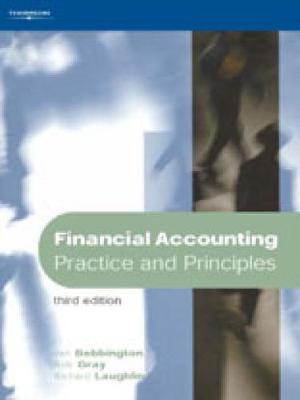
Financial Accounting :Practice and Principles
paperback
Published:
16 August, 2001


Popular Books by Jan Bebbington
View All Books by Jan Bebbington

Description
More Details
| Type | Book |
|---|---|
| ISBN13 | 9781861527714 |
| ISBN10 | 1861527713 |
| Number Of Pages | 452 |
| Item Weight | 880 g |
| Product Dimensions | 190 x 25 x 245 mm |
| Publisher / Reseller | Cengage Learning EMEA |
| Format | paperback |
| Edition | 3rd edition |
Media Reviews
Part One. 1. What is Accounting? And Why Study it Anyway? 2. Cash, Cashbooks and Units of Account. 3. Organizations, Organizational Subsystems and the Flows of Double Entry Bookkeeping. Part Two. 4. Organizational Flows, A Categorization of Basic Transactions, Accounting records and Double-Entry Bookkeeping. 5. Putting the Eight Basic Transactions to work, Producing the Accounting Records and an Initial Trial Balance. 6. The Accounting Information System: Organizing and Controlling the Accounting Records. 7. The Trial Balance and Categorization: The Accounting Conventions, Assets, Liabilities, Revenues, Expenses, Provisions and Reserves. Part Three. 8. Accruals, Prepayments and general Provisions and an Introduction to the Production and Format of the Profit and Loss Account and Balance Sheet. 9. Depreciation of Fixed Assets and Losses on Disposal. 10. Stock Allocation, Valuation and the Cost of Sales. 11. Bad and Doubtful Debts (and another Look at Provisions). 12. From the Trial Balance to the Financial Statements: Ownership Claims, Profit, Appropriations and Social Reality. 13. Partnerships. 14. Accounting Regulation and Company Accounts. Part Four. 15. Reading the Financial Statements and Annual Report: Cash Flow Analysis and Interpreting Financial Numbers. 16. Accounting for Changing Prices: An Introduction. 17. Expanding the Reporting Function: Social and Environmental Accounting Reporting. 18. Thinking about Accounting: Theoretical Perspectives on Financial Accounting and Reporting. Part Five. 19. Where Have we Been? Where Do We Go Next?