How Fiction Works
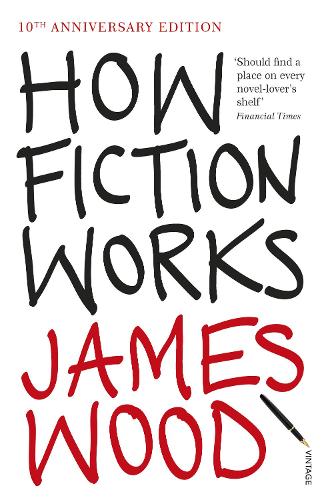
How Fiction Works
paperback
Published:
5 February, 2009

Popular Books by James Wood
View All Books by James Wood


Description
Rediscover this deep, practical anatomy of the novel from 'the strongest ... literary critic we have' (New York Review of Books) in this new revised 10th anniversary edition.
What do we mean when we say we 'know' a fictional character?
What constitutes a 'telling' detail?
When is a metaphor successful?
Is realism realistic?
Why do most endings of novels disappoint?
In the tradition of E. M. Forster's Aspects of the Novel and Milan Kundera's The Art of the Novel, How Fiction Works is a study of the main elements of fiction, such as narrative, detail, characterization, dialogue, realism, and style. In his first full-length book of criticism, one of the most prominent critics of our time takes the machinery of story-telling apart to ask a series of fundamental questions.
Wood ranges widely, from Homer to Beatrix Potter, from the Bible to John Le Carré, and his book is both a study of the techniques of fiction-making and an alternative history of the novel. Playful and profound, it incisively sums up two decades of bold, often controversial, and now classic critical work, and will be enlightening to writers, readers, and anyone interested in what happens on the page.
'Should find a place on every novel-lover's shelf. It has the quality all useful works of criticism should have: refined taste, keen observation, and the ability to make the reader argue, passionately, with it' Financial Times
More Details
| Type | Book |
|---|---|
| ISBN13 | 9781845950934 |
| ISBN10 | 1845950933 |
| Number Of Pages | 240 |
| Item Weight | 172 g |
| Product Dimensions | 128 x 197 x 14 mm |
| Publisher / Reseller | Vintage Publishing |
| Format | paperback |
Media Reviews
This compelling essay shows just how deeply, sensitively, imaginatively and joyfully he reads * Scotland on Sunday *
There aren't many book reviewers whose leaving one magazine to go to work for another would make the headlines. But then there aren't many book reviewers like James Wood * Sunday Telegraph *
Luminous... full of top-notch observations from the coal-face -- D.J. Taylor * Independent on Sunday *
Enchanting... Witty, concise, and composed with a lovely lightness of touch * Economist *
Exceptionally illuminating... brilliantly acute and enticingly widely read work. It should be compulsory reading for anyone in the reviewing trade and committed to memory before aspiring writers put pen to paper. For those who intend to pursue the underrated calling of reading fiction without wishing to add to its ranks, it will not only make reading more pleasurable, but articulate what you may have felt but never been able to express -- Rosemary Goring * Herald *
James Wood is Britain's lost literary critic. It's impossible to read this book and not want immediately to turn back to the authors he discusses...and read more of them, more closely, yourself. And very little literary criticism achieves that * Evening Standard *
Intelligent, well-read and extremely confident * Guardian *
Should find a place on every novel-lover's shelf. It has the quality all useful works of criticism should have: refined taste, keen observation, and the ability to make the reader argue, passionately, with it -- John Sutherland * Financial Times *
Fondly and delicately pieces back together what the deconstructors put asunder * Observer *
Displaying a playful exuberance wonderfully at odds with the dry, jargon-strewn tradition of academic criticism, this deft, slender volume analyses how novelists pull rabbits out of hats * The Economist *
GoodReads Reviews
Author's Bio
James Wood has been a staff writer at the New Yorker since 2007. In 2009, he won the National Magazine Award for reviews and criticism. He was the chief literary critic at the Guardian from 1992 to 1995, and a book critic at the New Republic from 1995 to 2007. He has published a number of books with Cape, including How Fiction Works, which has been translated into thirteen languages.