
1.47Kg of CO2

184 litre(s) of Water

0.011 Tree(s)

1 book donated to global literacy projects
Ethics - Classics of World Literature
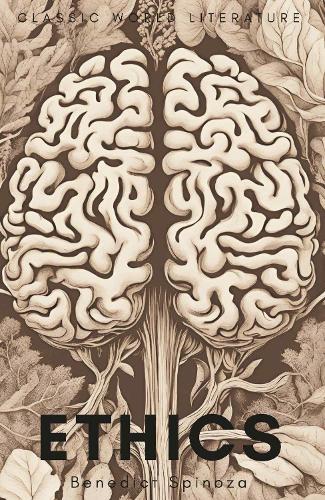
Ethics - Classics of World Literature
paperback
Published:
5 March, 2001


Popular Books by Benedict de Spinoza
View All Books by Benedict de Spinoza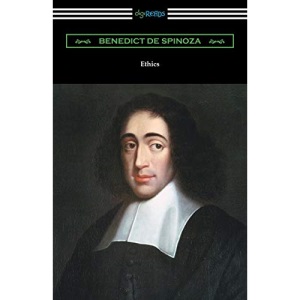





Description
Translated by W.H.White and A.K.Stirling. With an Introduction by Don Garrett.
Benedict de Spinoza lived a life of blameless simplicity as a lens-grinder in Holland. And yet in his lifetime he was expelled from the Jewish community in Amsterdam as a heretic, and after his death his works were first banned by the Christian authorities as atheistic, then hailed by humanists as the gospel of Pantheism.
His Ethics Demonstrated in Geometrical Order shows us the reality behind this enigmatic figure. First published by his friends after his premature death at the age of forty-four, the Ethics uses the methods of Euclid to describe a single entity, properly called both 'God' and 'Nature', of which mind and matter are two manifestations. From this follow, in ways that are strikingly modern, the identity of mind and body, the necessary causation of events and actions, and the illusory nature of free will.
More Details
| Type | Book |
|---|---|
| ISBN13 | 9781840221190 |
| ISBN10 | 1840221194 |
| Number Of Pages | 368 |
| Item Weight | 231 g |
| Product Dimensions | 129 x 198 x 19 mm |
| Publisher / Reseller | Wordsworth Editions Ltd |
| Format | paperback |
| Edition | New edition |
GoodReads Reviews
Author's Bio
Benedict de Spinoza (1632-1677), Dutch philosopher born of Portuguese-Jewish parents. An independent thinker, Spinoza declined offers of academic posts and pursued his individual philosophical inquiry, earning his living as a grinder of lenses. He was a major figure in 17th Century Rationalism and is regarded as the most eminent expounder of Pantheism. He believed that God, the Universe and Nature are one and everything in the Universe is part of God. Ethics was his major work and was published posthumously in 1677.