I Was Jack Mortimer
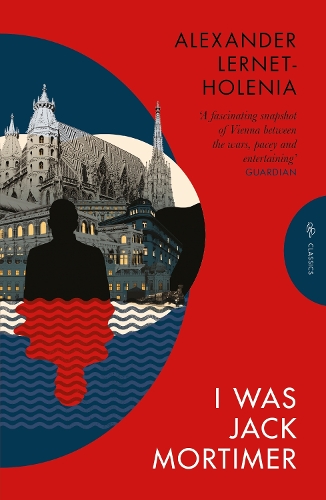
I Was Jack Mortimer
paperback | English
Published:
28 March, 2024

Popular Books by Alexander Lernet-Holenia
View All Books by Alexander Lernet-Holenia
Description
'A fascinating snapshot of Vienna between the wars, pacey and entertaining' Guardian
A man climbs into Ferdinand Sponer's cab and asks to be taken to the Hotel Bristol. Before he reaches his destination he has been murdered: shot through the throat. Though Sponer has committed no crime, he is drawn into the late Jack Mortimer's life. As the police circle closer, Sponer finds himself caught up in a tangled web of intrigue.
I Was Jack Mortimer is a breathless, darkly captivating tale of misappropriated identity from one of the leading Austrian writers of the twentieth century.
More Details
| Type | Book |
|---|---|
| ISBN13 | 9781805330370 |
| ISBN10 | 1805330373 |
| Number Of Pages | 208 |
| Item Weight | 1000 g |
| Publisher / Reseller | Pushkin Press |
| Format | paperback |
Media Reviews
"The cast of this brilliant thriller ... are pure Raymond Chandler ... but the Viennese setting gives it an extra, stylish twist. It's excEllently written and fearsomely gripping." - Kate Saunders, The Times
"Very few novels published in recent years match its daunting panache... The fast-moving, cleverly convoluted plot is brilliantly served by the sustained irony of Ignat Avsey's witty translation... a terrific book, one to read and then urge everyone else to follow suit... a truly clever, rather wonderful book that both plays with and defies genre." - Eileen Battersby, Irish Times
"A fascinating snapshot of Vienna between the wars, pacey and entertaining." - Laura Wilson, Guardian
"The action shifts and shimmers in a Vienna that comes to life." - Eileen Battersby, Irish Times
Author's Bio
Alexander Lernet-Holenia was born in Vienna in 1897. He served in the Austro-Hungarian army in the First World War and became a protégé of Rainer Maria Rilke. During his life he wrote poetry, novels, plays and was a successful screenwriter. His uneasy relationship with the National Socialist Party resulted in his removal from prominence in 1944, but after the end of the Second World War, he again became a vital figure in Austrian cultural life. He died in 1976.