Victorian Jesus :J.R. Seeley, Religion, and the Cultural Significance of Anonymity - Studies in Book and Print Culture
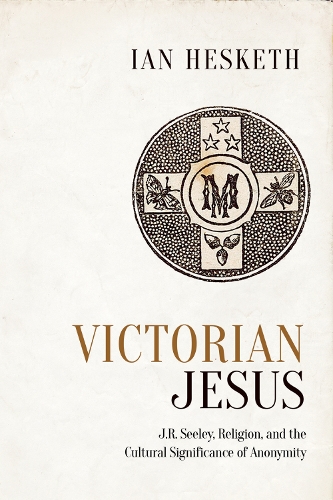
Victorian Jesus :J.R. Seeley, Religion, and the Cultural Significance of Anonymity - Studies in Book and Print Culture
hardback
Published:
6 October, 2017

Popular Books by Ian Hesketh
View All Books by Ian Hesketh

Description
Ecce Homo: A Survey in the Life and Work of Jesus Christ, published anonymously in 1865, alarmed some readers and delighted others by its presentation of a humanitarian view of Christ and early Christian history. Victorian Jesus explores the relationship between historian J. R. Seeley and his publisher Alexander Macmillan as they sought to keep Seeley’s authorship a secret while also trying to exploit the public interest.
Ian Hesketh highlights how Ecce Homo's reception encapsulates how Victorians came to terms with rapidly changing religious views in the second half of the nineteenth century. Hesketh critically examines Seeley’s career and public image, and the publication and reception of his controversial work. Readers and commentators sought to discover the author’s identity in order to uncover the hidden meaning of the book, and this engendered a lively debate about the ethics of anonymous publishing. In Victorian Jesus, Ian Hesketh argues for the centrality of this moment in the history of anonymity in book and periodical publishing throughout the century.
More Details
| Type | Book |
|---|---|
| ISBN13 | 9781442645776 |
| ISBN10 | 1442645776 |
| Number Of Pages | 288 |
| Item Weight | 560 g |
| Product Dimensions | 152 x 229 x 25 mm |
| Publisher / Reseller | University of Toronto Press |
| Format | hardback |
Media Reviews
"…[a] careful and detailed study of the production, promotion, and reception of this mid-century, bestselling work…."
- David Finkelstein (University of Edinburgh) (Canadian Journal of History)"The way the chapters on Seeley’s anonymity are written is so absorbing that, at times, I could even feel the tension provoked by his concealing the authorship of Ecce Homo from his family and colleagues. … Hesketh not only deals with the conception of history and its methodology emerging from Seeley’s books, but he also concretely shows the entanglement of morality, scientificity, and religious views in nineteenth-century Britain. His book will appeal to historians of the modern period … as well as to cultural and literary scholars interested in book history and in intellectual and religious history; all will find it a very accurate and at the same time captivating study. It could be described as the intersection between the biography of Seeley and the ‘biography’ of his Ecce Homo".
- Laura Meneghello (Siegen University) (Isis)"A strength of Ian Hesketh’s Victorian Jesus is its insightful exploration of the entire phenomenon of anonymous publishing with all its rewards, pitfalls and changing conventions."
- Timothy Larsen (Wheaton College) (Times Literary Supplement)"Victorian Jesus provides an excellent, interesting, and well-written account of Ecce Homo, nineteenth-century publishing, and a contentious religious milieu. As such, the book will be useful to a variety of scholars…[I]t represents a fine addition to University of Toronto Press’s ‘Studies in Book and Print Culture’ series."
- Andrew C. Russell (Bethel University) (Newman Studies Journal)"Ian Hasketh’s Victorian Jesus: J. R. Seeley, Religion, and the Cultural Significance of Anonymity is simultaneously a study of Victorian religious debate and a case study in the role of the author and publisher in the Victorian book trade."
- Andrea Henderson (SEL Autumn 58 4 Omnibus)"This book will appeal to historians of the modern period – specifically to historians of religion – as well as to cultural and literary scholars interested in book history and in intellectual and religious history; all will find it a very accurate and at the same time captivating study."
- Laura Meneghello, Siegen University (Isis, vol 109:4)"By firmly grounding an important individual case in its cultural and commercial contexts, Victorian Jesus marks a substantial advance in the history of Victorian religious publishing, which is still understood more in outline than in the kind of depth that Hesketh offers in this book."
- Joshua Bennett, Christ Church, Oxford (Journal Of Ecclesiastical History, vol 70 no 2, April '19)"…Hesketh’s meticulous synopsis will drive you to read or re-read Ecce Homo. Victorian Jesus is itself a Seeley-esque mine of detail, but always deftly written. The production of the book is first rate too, with the kabbalistic logo of the Macmillans (beautifully explained inside) resplendent on the dust jacket."
- Julian Thompson, Regent's Park Colleg (Notes and Queries, vol 66 no 2, June '19)"Hesketh has made an important contribution to the intellectual-spiritual history of the Victorian era in a most engaging and perceptive way that is unexpectedly instructive for scholars of nineteenth-century British history today. Altogether an excellent book."
- John A. Moses (Journal of Religious History)"Hesketh’s unearthing of the forgotten controversy of Ecce Homo not only recovers this ‘discussion about Christianity and authorial identity’ but does so in a way that vividly realizes the complexity and urgency of the religious debates that animated the period. The result is an impressive example of historical reconstruction that will be of interest to Victorianists and book historians alike."
- Kimberly Rodda (University of Toronto Quarterly)"This monograph makes a substantial contribution to the field of book history, but also offers valuable insights into the impulses of the Victorian Broad Church. Publishing, marketing, reader reception, intellectual history and theology come together in this analysis of Seeley’s fraught yet optimistic efforts to transcend the sectarian battle lines of the day."
- Joseph Stubenrauch (English Historical Review)Author's Bio
Ian Hesketh is an ARC Future Fellow at the Institute for Advanced Studies in the Humanities at the University of Queensland.