Subject to Colonialism :African Self-Fashioning and the Colonial Library
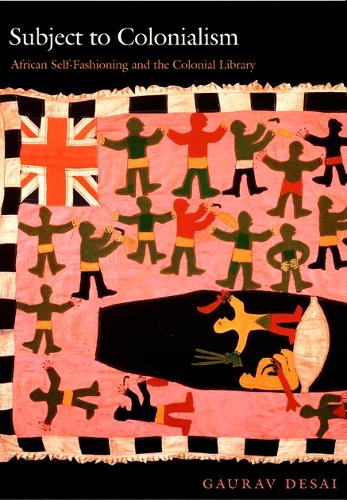
Subject to Colonialism :African Self-Fashioning and the Colonial Library
paperback
Published:
20 June, 2001

Popular Books by Gaurav Desai
View All Books by Gaurav Desai
Description
Presenting colonialism not as a singular, monolithic structure but rather as a practice frought with contradictions and tensions, Desai works to historicize the foundation of postcolonialism by decentering both canonical texts and privileged categories of analysis such as race, capitalism, empire, and nation. To achieve this, he focuses on texts that construct or reform-rather than merely reflect-colonialism, placing explicit emphasis on processes, performances, and the practices of everyday life. Reading these texts not merely for the content of their assertions but also for how they were created and received, Desai looks at works such as Jomo Kenyatta’s ethnography of the Gikuyu and Akiga Sai’s history of the Tiv and makes a particular plea for the canonical recuperation of African women’s writing.
Scholars in African history, literature, and philosophy, postcolonial studies, literary criticism, and anthropology will welcome publication of this book.
More Details
| Type | Book |
|---|---|
| ISBN13 | 9780822326410 |
| ISBN10 | 0822326418 |
| Number Of Pages | 216 |
| Item Weight | 467 g |
| Publisher / Reseller | Duke University Press |
| Format | paperback |
Media Reviews
“A thoroughly original work. Subject to Colonialism establishes Desai as a new authority in the study of African letters and thought across the twentieth century.” -David William Cohen, author of The Combing of History “Gaurav Desai has adopted in this study an original and productive approach to postcolonial literature by situating the discursive practices generated by the colonial encounter in a more comprehensive perspective than is usually offered in studies of this kind.”-F. Abiola Irele, Ohio State University “With its unassuming honesty, clarity of style, and fine balance of argument and information-virtues not often displayed in ‘postcolonial’ writing-this book is bound to find the readers it deserves beyond the narrow circle of the experts and the converted.”-Johannes Fabian, University of Amsterdam
Author's Bio
Gaurav Desai is Associate Professor in the Department of English and the Program of African and African Diaspora Studies at Tulane University.