Critical Terms for the Study of Africa - Critical Terms
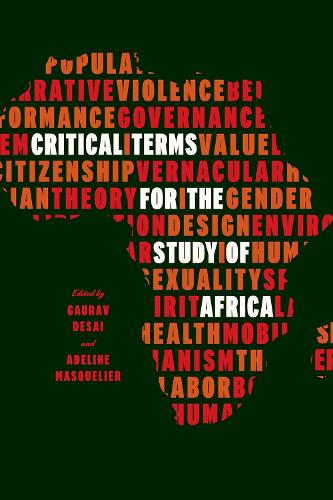
Critical Terms for the Study of Africa - Critical Terms
paperback
Published:
21 December, 2018

Popular Books by Gaurav Desai
View All Books by Gaurav Desai


Description
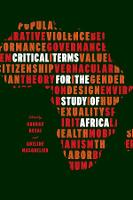
Written by a distinguished group of scholars, the essays compiled in this volume take stock of African studies today and look toward a future beyond its fraught intellectual and political past. Each essay discusses one of our most critical terms for talking about Africa, exploring the trajectory of its development while pushing its boundaries. Editors Gaurav Desai and Adeline Masquelier balance the choice of twenty-five terms between the expected and the unexpected, calling for nothing short of a new mapping of the scholarly field. The result is an essential reference that will challenge assumptions, stimulate lively debate, and make the past, present, and future of African Studies accessible to students and teachers alike.
More Details
| Type | Book |
|---|---|
| ISBN13 | 9780226548975 |
| ISBN10 | 022654897X |
| Number Of Pages | 432 |
| Item Weight | 680 g |
| Product Dimensions | 17 x 23 x 3 mm |
| Publisher / Reseller | The University of Chicago Press |
| Format | paperback |
Media Reviews
Critical Terms for the Study of Africa is an essential introduction to the fields of teaching and learning Africa. This book engages students more critically in the failures, limits, and values of a succession of 'critical terms', to help them understand the ways in which concepts can privilege certain ways of knowing, and to give them some particularly valuable concepts that might lead to growth in their knowledge and sophistication in the study of Africa. --David William Cohen, emeritus, University of Michigan
Critical Terms for African Studies will serve as a sourcebook for connecting contemporary African Studies not only to the classical canon but also to the specific regional, global, and colonial history that forged the concept of Africa. This book will serve both as a crucial teaching tool in undergraduate and graduate classes and as required reading for Africanist scholars. The essays it contains deftly master a readable tone that makes a complex history and set of theoretical ideas accessible without dumbing down the material or making it redundant to those who are already well versed in the field. Perhaps most remarkable is that despite the great diversity of authors, perspectives, and disciplines present in this book, there remains an underlying unity of vision connecting the threads--a vision with the capacity to breathe new life into the domain of Africanist scholarship. --Sasha Newell, Universit libre de Bruxelles