
0.64Kg of CO2

80 litre(s) of Water

0.0048 Tree(s)

1 book donated to global literacy projects
Self-Evaluation :What's In It For Schools? - What's in it for schools?
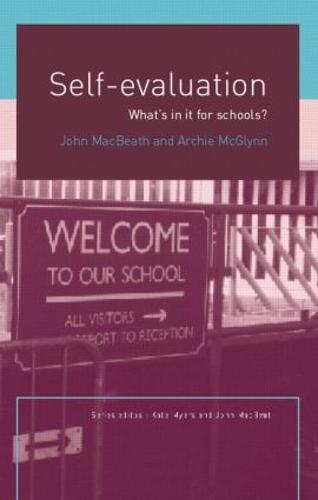
Self-Evaluation :What's In It For Schools? - What's in it for schools?
paperback
Published:
28 March, 2002


Popular Books by John MacBeath
View All Books by John MacBeath
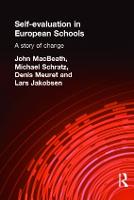
Description
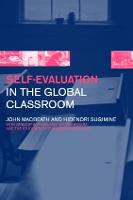
Self-evaluation in schools sits at the top of the national agenda in response to an awareness that performance tables and inspector's reports can only tell a partial story. Schools are now encouraged to raise questions about 'How are we doing?' and 'How do we know?'.
Self-Evaluation: What's in it for Schools? demystifies school self-evaluation and encourages schools to be self-critical and self-confident. The book helps schools and teachers develop the necessary confidence to work with evaluation tools. Accessible and packed with case studies, it tackles the issues that are at the forefront of the national agenda in most countries in Europe. Challenging ideas for the future are given through discussion of the concerns and issues of schools in the present day.
More Details
| Type | Book |
|---|---|
| ISBN13 | 9780415277426 |
| ISBN10 | 0415277426 |
| Number Of Pages | 160 |
| Item Weight | 680 g |
| Publisher / Reseller | Taylor & Francis Ltd |
| Format | paperback |
Media Reviews
'They provide an excellent resume of the progress UK schools have made in school improvement, setting out the principles for self-evaluation, and make a particularly good case for the importance of context.' - Times Educational Supplement
'Self evaluation is very readable and packs much into its 150 pages ... The book is very accessible and clearly set out with questions posed throughout to stimulate reflections and discussion. It might be read alone and/or used in collaboration with colleagues as a preparation for external inspection. More usefully in my view it can be used to encourage the notion that continuous self-evaluation makes for a more open and transparent culture, one in which each person is valued for what they contribute.' - Educational Review
'For the practitioner, there are numerous helpful, ready-to-use examples of self-evaluation instruments ... that could be used in school and classroom contexts ... Overall this is a valuable discussion of the how and why of school self-evaluation and there is no doubt that teachers, headteachers and others would benefit from extracting practical instruments and ideas from the various chapters of this book.' - Educational Research
'Self evaluation is very readable and packs much into its 150 pages ... The book is very accessible and clearly set out with questions posed throughout to stimulate reflections and discussion. It might be read alone and/or used in collaboration with colleagues as a preparation for external inspection. More usefully in my view it can be used to encourage the notion that continuous self-evaluation makes for a more open and transparent culture, one in which each person is valued for what they contribute.' - Educational Review
'For the practitioner, there are numerous helpful, ready-to-use examples of self-evaluation instruments ... that could be used in school and classroom contexts ... Overall this is a valuable discussion of the how and why of school self-evaluation and there is no doubt that teachers, headteachers and others would benefit from extracting practical instruments and ideas from the various chapters of this book.' - Educational Research
Author's Bio
John MacBeath O.B.E. is Professor of Educational Leadership at the University of Cambridge. He is the author of Schools Must Speak for Themselves (Routledge, 1999) and numerous books on self-evaluation and school improvement.
Archie McGlynn was formerly HMCI in the Scottish Executive Education Department, and is currently a Director of the International Network for Educational Improvement and put in place the self-evaluation guidelines, ‘How Good is Our School?’.