
1.22Kg of CO2

152 litre(s) of Water

0.0091 Tree(s)

1 book donated to global literacy projects
Education, Social Justice and Inter-Agency Working :Joined Up or Fractured Policy? - Routledge Research in Education
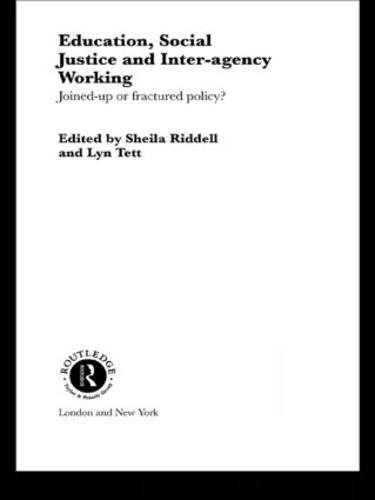
Education, Social Justice and Inter-Agency Working :Joined Up or Fractured Policy? - Routledge Research in Education
hardback
Published:
13 September, 2001


Popular Books by Sheila Riddell
View All Books by Sheila Riddell
Description
More Details
| Type | Book |
|---|---|
| ISBN13 | 9780415249225 |
| ISBN10 | 0415249228 |
| Number Of Pages | 304 |
| Item Weight | 612 g |
| Publisher / Reseller | Taylor & Francis Ltd |
| Format | hardback |
Media Reviews
'The book is clearly current, but it will remain relevant to anyone with an interest in inter-agency working.' - Rob Watling, University of Leicester, Social Policy
'The authors of Education, Social Justice and Inter-Agency Working hope that this collection of papers leaves the reader with many questions to ponder.' It does, but it does more than that: it obliges the readers to decide which version of joined-up thinking they wish to practise.' - Paul Taylor, European Journal of Social Work
'The book is clearly current, but it will remain relevant to anyone with an interest in inter-agency working.' - Social Policy, Rob Watling, University of Leicester
'The authors of Education, Social Justice and Inter-Agency Working hope that this collection of papers leaves the reader with many questions to ponder.' It does, but it does more than that: it obliges the readers to decide which version of joined-up thinking they wish to practise.' - European Journal of Social Work, Paul Taylor