New Insights into Glioblastoma :Diagnosis, Therapeutics and Theranostics
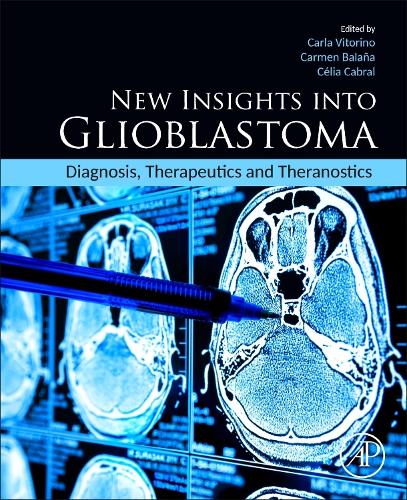
New Insights into Glioblastoma :Diagnosis, Therapeutics and Theranostics
paperback
Published:
18 May, 2023

Popular Books by MD
View All Books by MD







Description
More Details
| Type | Book |
|---|---|
| ISBN13 | 9780323998734 |
| ISBN10 | 0323998739 |
| Number Of Pages | 786 |
| Item Weight | 450 g |
| Publisher / Reseller | Elsevier Science & Technology |
| Format | paperback |
Author's Bio
Carla Vitorino is Assistant Professor at the Faculty of Pharmacy, University of Coimbra. in the Pharmaceutical Technology area and is an integrated researcher at the Coimbra Chemistry Centre, currently a part of the associate laboratory Institute of Molecular Sciences (IMS). Her research and development activities have been fundamentally directed towards three interrelated focal points: (i) Scientific: The primary emphasis here pertains to the formulation of more effective strategies in conjunction with drug nanodelivery systems, tailored to address multipurpose requisites within unmet medical needs. Specifically, she has been working on the application of nanotechnology in drug permeation enhancement strategies for transdermal, oral, and drug delivery systems to brain targeting. Under the projects she has coordinated and co-coordinated, she has contributed to the development of advanced nanotechnological formulations, specifically tailored for brain targeting in the context of tumor treatment and diagnosis. Through the integration of in silico-in vitro-in vivo approaches, she has fostered the development of new treatment strategies for brain tumor patients and improved diagnosis, establishing the bridge between pharmaceutical research and clinical practice. Alternative routes to access brain (e.g. intranasal administration) for delivering drugs in a more efficient way have also been explored. (ii) Industrial: This has been grounded on the systematic deployment of frameworks driven by a quality by design (QbD) philosophy, along with process analytical technology (PAT) tools. The central tenet lies in the application of structured approaches to the development of specific drug products, including but not limited to semi-solids and injectables. Concomitantly, in-line process control and monitoring mechanisms are incorporated. (iii) Regulatory: This has been directed to the development of analytical protocols, elaborated as surrogate modalities for clinical trials. These protocols, addressing in vitro methodologies, are designed to facilitate the bioequivalence assessment of generic topical drug products, thus holding relevance in regulatory contexts. Carmen Balana created one of the first neuro-oncology committees in Spain and was a founder of the Spanish Neurooncological Group (now GEINO), where she was president and remain an active member. Her first publication as first author in a high-impact journal was in 2003 on liquid biopsies in high-grade gliomas, which has only recently become a strong research line. Other professional accomplishments: EORTC Brain Tumor Study Group (since 2002); reviewer and Editorial Committee member on several journals, including Neuro-Oncology; invited speaker at ESMO 2019 and ESMO ASIA 2020; President, IGTP Internal Scientific Committee (since 2017); President, Catalan-Balearic Oncology Society (since September 2020); PI, 70+ clinical trials (35 in CNS). She coordinated several ISCII grants and recently the Marató TV3 (665/C/2013) grant (1,690,500€), when she was able to coordinate six Catalan hospitals on a large clinical, radiological, immunohistochemical and molecular study of glioblastoma. Célia Cabral graduated in Biology from the University of Coimbra and obtained her PhD in Biology, in the speciality of Systematics and Morphology, by the same institution, involving the Faculty of Sciences and Technology, the Faculty of Pharmacy and the Royal Botanic Garden Edinburgh (RBGE), UK. Between 2011 and 2017, Dr. Cabral did a 6-year post-doc at the Faculty of Pharmacy of UC. Currently, she is Researcher at the Faculty of Medicine of the University of Coimbra and Invited professor at the Universidade Lusófona. She has a multidisciplinary scientific path, with emphasis in Phytochemistry, Pharmacognosy, Natural products and Plant-based health solutions. Her main research interests are ethnopharmacology, phytochemistry, drug delivery of natural products, development of food supplements and natural products-based cosmetics.