When you buy a used copy YOU SAVE

0.98Kg of CO2

122.5 litre(s) of Water

0.0074 Tree(s)

1 book donated to global literacy projects
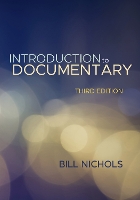
Introduction to Documentary
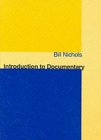
Introduction to Documentary
paperback
Published:
1 January, 2002
paperback
Published:
1 January, 2002

Standard worldwide delivery by
Tue, July 21 - Fri, July 24
Order within
0

Condition:
USED
$8.81
RRP
$18.75
You save $9.95 (53%)
Available
2
in stock
FREE Returns within 30 days
Popular Books by Bill Nichols
View All Books by Bill Nichols
Description
Introduction to Documentary provides a one-of-a-kind overview of the most important topics and issues in documentary history and criticism. Designed for students in any field that makes use of visual evidence and persuasive strategies, from the law to anthropology, and from history to journalism, this book spells out the distinguishing qualities of documentary. A wide-ranging and freewheeling form of film making, documentary has not yet received a proper, written introduction to its public, or its future makers. Introduction to Documentary is not organized as a history of the form although its examples span a century of film making. Instead, this book offers suggestive answers to basic issues that have stood at the center of all debate on documentary from its very beginnings to today. Each chapter takes up a distinct question from 'How did documentary film making get started?' to 'Why are ethical issues central to documentary?' These questions move through issues of ethics, form, modes, voice, history and politics, among others. A final chapter addresses the question of how to write about documentary in a clear, convincing manner. Introduction to Documentary provides the foundational key to further explorations in this exceptionally vital area of center making today.
More Details
| Type | Book |
|---|---|
| ISBN13 | 9780253214690 |
| ISBN10 | 0253214696 |
| Number Of Pages | 245 |
| Item Weight | 421 g |
| Product Dimensions | 166 x 18 x 224 mm |
| Publisher / Reseller | Indiana University Press |
| Format | paperback |
See More +
Media Reviews
Bill Nichols' succinct Introduction to Documentary would make an ideal textbook, and that's no backhanded compliment. Patiently, almost tenderly, the author leads the reader step by step through the thicket of moral, political, aesthetic and technological issues documentary film raises - writing in a clean style that doesn't simplify ideas so much as distil them. - SIGHT AND SOUND, August 2002