Chess :A Novel - Penguin Modern Classics
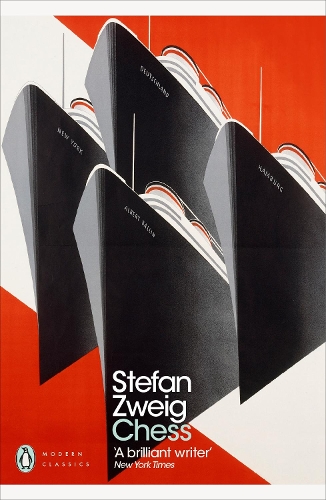
Chess :A Novel - Penguin Modern Classics
paperback | English
Published:
1 June, 2017

Popular Books by Stefan Zweig
View All Books by Stefan Zweig





Description
'... a human being, an intellectual human being who constantly bends the entire force of his mind on the ridiculous task of forcing a wooden king into the corner of a wooden board, and does it without going mad!'
A group of passengers on a cruise ship challenge the world chess champion to a match. At first, they crumble, until they are helped by whispered advice from a stranger in the crowd - a man who will risk everything to win. Stefan Zweig's acclaimed novella Chess is a disturbing, intensely dramatic depiction of obsession and the price of genius.
More Details
| Type | Book |
|---|---|
| ISBN13 | 9780241305164 |
| ISBN10 | 0241305160 |
| Number Of Pages | 96 |
| Item Weight | 82 g |
| Product Dimensions | 124 x 196 x 7 mm |
| Publisher / Reseller | Penguin Books Ltd |
| Format | paperback |
Media Reviews
A brilliant writer * New York Times *
One of the joys of recent years is the translation into English of Stefan Zweig's stories -- Edmund de Waal
Stefan Zweig was a late and magnificent bloom from the hothouse of fin de siecle Vienna * The Wall Street Journal *
Zweig is one of the masters of the short story and novella, and by 'one of the masters' I mean that he's up there with Maupassant, Chekhov, James, Poe, or indeed anyone you care to name -- Nick Lezard * Guardian *
A new favourite writer of mine -- Wes Anderson
Perhaps the best chess story ever written, perhaps the best about any game -- Economist
His great achievement in short form * The Times *
GoodReads Reviews
Author's Bio
Stefan Zweig was born in 1881 in Vienna to a wealthy Austrian-Jewish family. Recognition as a writer came early for Zweig; by the age of forty, he had already won literary fame. In 1934, with Nazism entrenched, Zweig left Austria for England, and became a British citizen in 1940. In 1941 he and his second wife went to Brazil, where they committed suicide. Zweig's best-known works of fiction are Beware of Pity (1939) and Chess (1942), but his most outstanding accomplishments were his many biographies, which were based on psychological interpretation.