Chess :A Novel - Penguin Archive

Chess :A Novel - Penguin Archive
paperback | English
Published:
17 April, 2025

Popular Books by Stefan Zweig
View All Books by Stefan Zweig





Description
90 Classic titles celebrating 90 years of Penguin Books
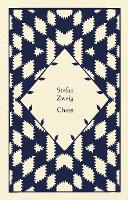
My delight in playing turned to a lust for playing, my lust for playing into a compulsion to play, a mania, a frenetic fury that filled not only my waking hours but also came to invade my sleep. I could think of nothing but chess, I thought only in chess moves and chess problems . . .
As a chess obsessive, what if you have a once-in-a-lifetime opportunity to play the world champion, but it might send you to the edge of madness . . . and tip you over?
More Details
| Type | Book |
|---|---|
| ISBN13 | 9780241747292 |
| ISBN10 | 0241747295 |
| Number Of Pages | 96 |
| Item Weight | 64 g |
| Product Dimensions | 110 x 180 x 6 mm |
| Publisher / Reseller | Penguin Books Ltd |
| Format | paperback |
Media Reviews
A brilliant writer—New York Times
One of the joys of recent years is the translation into English of Stefan Zweig's stories—Edmund de Waal
Stefan Zweig was a late and magnificent bloom from the hothouse of fin de siecle Vienna—The Wall Street Journal
Zweig is one of the masters of the short story and novella, and by 'one of the masters' I mean that he's up there with Maupassant, Chekhov, James, Poe, or indeed anyone you care to name—Nick Lezard, Guardian
A new favourite writer of mine—Wes Anderson
Perhaps the best chess story ever written, perhaps the best about any game—Economist
His great achievement in short form—The Times
Author's Bio
Stefan Zweig was born in 1881 in Vienna to a wealthy Austrian-Jewish family. Recognition as a writer came early for Zweig; by the age of forty, he had already won literary fame. In 1934, with Nazism entrenched, Zweig left Austria for England, and became a British citizen in 1940. In 1941 he and his second wife went to Brazil, where they committed suicide. Zweig's best-known works of fiction are Beware of Pity (1939) and Chess (1942), but his most outstanding accomplishments were his many biographies, which were based on psychological interpretation.