
0.63Kg of CO2

79 litre(s) of Water

0.0047 Tree(s)

1 book donated to global literacy projects
Existentialism - OPUS
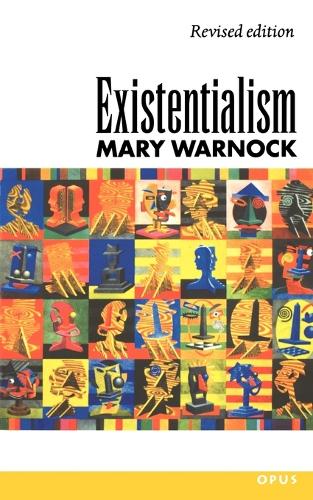
Existentialism - OPUS
paperback
Published:
13 August, 1970


Popular Books by Mary Warnock
View All Books by Mary Warnock
Description
More Details
| Type | Book |
|---|---|
| ISBN13 | 9780198880523 |
| ISBN10 | 0198880529 |
| Number Of Pages | 158 |
| Item Weight | 136 g |
| Product Dimensions | 129 x 196 x 11 mm |
| Publisher / Reseller | Oxford University Press |
| Format | paperback |
Media Reviews
Deserves praise on several counts. In the first place, Mrs. Warnock writes from a position of some philosophical detachment towards the thinkers whose work she expounds....yet she also displays an imaginative sympathy with their aims and ideas which makes her criticisms of their work all the more
worthy of attention. --Times Literary Supplement
Deserves praise on several counts. In the first place, Mrs. Warnock writes from a position of some philosophical detachment towards the thinkers whose work she expounds....yet she also displays an imaginative sympathy with their aims and ideas which makes her criticisms of their work all the more
worthy of attention. --Times Literary Supplement
Deserves praise on several counts. In the first place, Mrs. Warnock writes from a position of some philosophical detachment towards the thinkers whose work she expounds....yet she also displays an imaginative sympathy with their aims and ideas which makes her criticisms of their work all the more worthy of attention. --Times Literary Supplement
Deserves praise on several counts. In the first place, Mrs. Warnock writes from a position of some philosophical detachment towards the thinkers whose work she expounds....yet she also displays an imaginative sympathy with their aims and ideas which makes her criticisms of their work all the more worthy of attention. --Times Literary Supplement
Deserves praise on several counts. In the first place, Mrs. Warnock writes from a position of some philosophical detachment towards the thinkers whose work she expounds....yet she also displays an imaginative sympathy with their aims and ideas which makes her criticisms of their work all the more worthy of attention. --Times Literary Supplement
GoodReads Reviews
Author's Bio
Baroness Warnock is a philosopher, broadcaster, and member of the House of Lords. She is currently a member of the Archbishop of Canterbury's Advance Group on Medical Ethics. She has writen a number of books including Ethics Since 1900 (3/e); Existentialist Ethics; Jean-Paul Sartre; Imagination; Schools of Thought; What Must We Teach?; A Question of Life; and The Uses of Philosophy.