When you buy a used copy YOU SAVE

1.44Kg of CO2

180 litre(s) of Water

0.0108 Tree(s)

1 book donated to global literacy projects
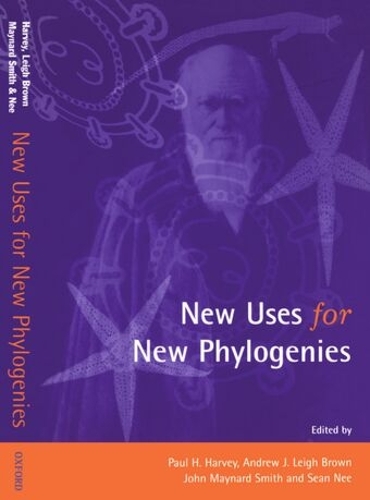
New Uses for New Phylogenies
New Uses for New Phylogenies
paperback
Published:
16 May, 1996
paperback
Published:
16 May, 1996

Standard worldwide delivery by
Fri, July 10 - Wed, July 15
Order within
0

Condition:
USED
$10.42
RRP
$76.73
You save $66.30 (86%)
Available
2
in stock
FREE Returns within 30 days
Popular Books by Harvey
View All Books by Harvey









Description
Recent advances in molecular genetics make the sequencing of genes a straightforward exercise. Comparisons of sequenced genes from different individuals of a species, or from different species, allow the construction of family trees or evolutionary trees which reveal genetic relationships. This volume shows for the first time how those trees, or phylogenies, can be used to answer questions about population dynamics, epidemiology, development, biodiversity, conservation, and the evolution of genetic systems. The techniques for deciding what these new trees can tell us come together in a unified framework so that a common set of methods can be applied, whatever area of biology interests the research worker.
More Details
| Type | Book |
|---|---|
| ISBN13 | 9780198549840 |
| ISBN10 | 0198549849 |
| Number Of Pages | 360 |
| Item Weight | 540 g |
| Product Dimensions | 157 x 234 x 20 mm |
| Publisher / Reseller | Oxford University Press |
| Format | paperback |
See More +
Media Reviews
The chapters are concise ... but with plenty of references, and written with the authority of some of the major figures in molecular evolution. For me, the book was a gift. * Times Higher Education Supplement *
this volume comprises the most diverse collection of phylogenetic applications ever assembled in one place ... anyone who has followed the growth of phylogenetics' impact on evolutionary biology will be interested in the diversity of perspectives presented here. The papers in this volume collectively give the distinct impression that a rich discipline is approaching a turning point. * Michael J. Sanderson, University of California, Davis, TREE vol. 12, no. 5 May 1997 *