
1.27Kg of CO2

159 litre(s) of Water

0.0095 Tree(s)

1 book donated to global literacy projects
Introduction to Integration
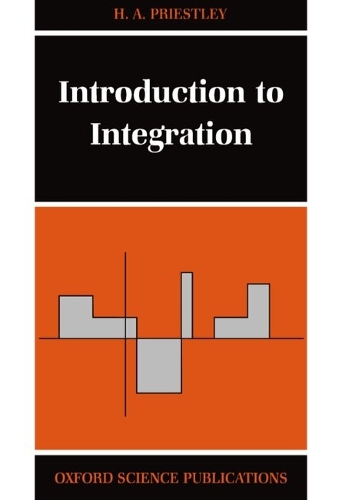
Introduction to Integration
paperback
Published:
28 August, 1997


Popular Books by H. A. Priestley
View All Books by H. A. Priestley
Description
More Details
| Type | Book |
|---|---|
| ISBN13 | 9780198501237 |
| ISBN10 | 0198501234 |
| Number Of Pages | 318 |
| Item Weight | 486 g |
| Product Dimensions | 156 x 232 x 18 mm |
| Publisher / Reseller | Oxford University Press |
| Format | paperback |
Media Reviews
Delightful book. Those who know Hilary Priestley will recognise at once the impish sense of fun which permeates this book (even down to the selection of notation): she has a real gift for the memorable phrase and the agonies oand ecstasies of teaching 25 years worth of Oxford undergraduates are etched in the motivational and orientational remarks, helpful reiterations of key points, local stock-taking' susummaries and tight internal sign-posting. By its very nature integration theory cannot be made easy, but Professor Priestley will rapidly earn the gratitude of a new generation of students for making it as pleasantly palatable as one could wish for.
This is a very readable and well-planned book, most suitable for all mathematics graduates. The emphasis is on practice with many applications in the later chapters.