The History of Time :A Very Short Introduction - Very Short Introductions
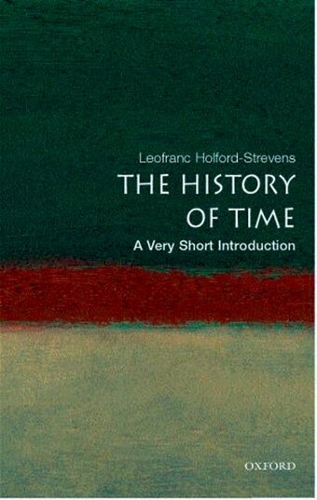
The History of Time :A Very Short Introduction - Very Short Introductions
paperback
Published:
11 August, 2005
paperback
Published:
11 August, 2005

Standard worldwide delivery by
Wed, July 15 - Mon, July 20
Order within
0
Popular Books by Leofranc Holford-Strevens
View All Books by Leofranc Holford-Strevens
Description
Why do we measure time in the way that we do? Why is a week seven days long? At what point did minutes and seconds come into being? Why are some calendars lunar and some solar? The organisation of time into hours, days, months and years seems immutable and universal, but is actually far more artificial than most people realise. The French Revolution resulted in a restructuring of the French calendar, and the Soviet Union experimented with five and then six-day weeks. Leofranc Holford-Strevens explores these questions using a range of fascinating examples from Ancient Rome and Julius Caesar's imposition of the Leap Year, to the 1920s' project for a fixed Easter. ABOUT THE SERIES: The Very Short Introductions series from Oxford University Press contains hundreds of titles in almost every subject area. These pocket-sized books are the perfect way to get ahead in a new subject quickly. Our expert authors combine facts, analysis, perspective, new ideas, and enthusiasm to make interesting and challenging topics highly readable.
More Details
| Type | Book |
|---|---|
| ISBN13 | 9780192804990 |
| ISBN10 | 0192804995 |
| Number Of Pages | 160 |
| Item Weight | 143 g |
| Product Dimensions | 111 x 174 x 10 mm |
| Publisher / Reseller | Oxford University Press |
| Format | paperback |
See More +
Author's Bio
Leofranc Holford-Strevens, a classicist, received a D.Phil from Oxford University in 1971. The author of Aulus Gellius (1988), and co-author of The Oxford Companion to the Year (OUP 1999), he is a desk-editor with Oxford University Press. He has a long-standing interest in calendars, chronologies, and the calculation of time.