Fossil Fungi
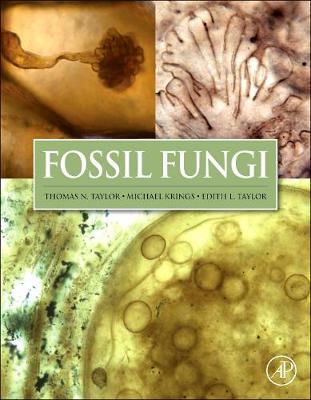
Fossil Fungi
hardback
Published:
24 September, 2014

Popular Books by Munich
View All Books by Munich
Description
More Details
| Type | Book |
|---|---|
| ISBN13 | 9780123877314 |
| ISBN10 | 0123877318 |
| Number Of Pages | 398 |
| Item Weight | 1440 g |
| Publisher / Reseller | Elsevier Science Publishing Co Inc |
| Format | hardback |
Media Reviews
"...I profited much from the insights into the particular accomplishments and problems unique for paleomycology in this comprehensive pioneer book about fungal life through geological epochs. It is a unique reference for everyone interested in fungal phylogeny and paleoecology." --Nova Hedwigia "...a comprehensive and wonderful review of the literature on fossil fungi. The authors are uniquely qualified to explain and interpret paleobotany and by extension, fossil fungi." --Inoculum "I have never seen a scientific book so thoroughly illustrated with so many excellent pictures...highly recommended for mycologists, palaeontologists, botanists and other interested in fossils, fungi, or prehistoric life." --Nordic Journal of Botany, February 2015 "...the first book that attempts to synthesize the scattered literature on fossil fungi and thus become a standard, go to, text on the subject area. It succeeds admirably and I envisage that it will fill this role for years to come." --BSA Paleobotanical Section, December 2014
GoodReads Reviews
Author's Bio
Michael Krings is curator for fossil plants at the Bavarian State Collection for Palaeontology and Geology (SNSB-BSPG) in Munich, Germany, and professor of plant paleobiology at the Ludwig-Maximilians-Universität Munich. He also holds an affiliate faculty position in the Department of Ecology and Evolutionary Biology at the University of Kansas. He received his PhD in botany from the University of Münster, Germany, and was an Alexander von Humboldt-Foundation postdoctoral fellow at the University of Kansas. His research interests include Carboniferous, Permian, and Triassic seed plants and the biology and ecology of microorganisms in late Paleozoic terrestrial ecosystems.