PISA, Policy and the OECD :Respatialising Global Educational Governance Through PISA for Schools
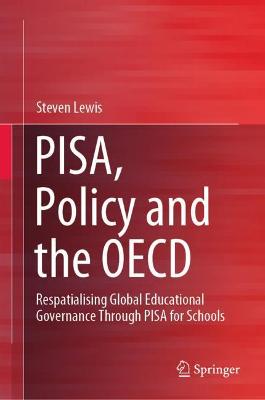
PISA, Policy and the OECD :Respatialising Global Educational Governance Through PISA for Schools
hardback
Published:
30 September, 2020
hardback
Published:
30 September, 2020

Standard worldwide delivery by
Tue, August 4 - Fri, August 7
Order within
0
Popular Books by Steven Lewis
View All Books by Steven Lewis



Description
This book explores new modes, spaces and relations of the Organisation for Economic Cooperation and Development (OECD)'s global educational governance associated with the PISA for Schools test. Adopting a theoretically-rich policy sociology approach, with an emphasis on topological understandings of spatiality and power, the book examines the entire PISA for Schools policy cycle, from its initial development, to its administration and promotion in the U.S., and its local enactment by schools and teachers. It demonstrates how PISA for Schools helps to steer how schooling is locally understood and practised through separate and yet overlapping techniques: governing by (1) heterarchy, (2) respatialisation and (3) 'best practice'.
The book reveals the specific effects of PISA for Schools as an exemplar of how global educational governance is increasingly enfolded within contemporary schooling, as well as discussing how we mightpractise a policy sociology in which the local is acknowledged as a relevant space of concern.
The book reveals the specific effects of PISA for Schools as an exemplar of how global educational governance is increasingly enfolded within contemporary schooling, as well as discussing how we mightpractise a policy sociology in which the local is acknowledged as a relevant space of concern.
More Details
| Type | Book |
|---|---|
| ISBN13 | 9789811582844 |
| ISBN10 | 981158284X |
| Number Of Pages | 192 |
| Item Weight | 1000 g |
| Publisher / Reseller | Springer Verlag, Singapore |
| Format | hardback |
| Edition | 2020 ed. |
See More +
Author's Bio
Dr Steven Lewis is an Australian Research Council (ARC) DECRA Fellow at the Education Governance and Policy group within the Research for Educational Impact Centre of Deakin University. His current research interests are concerned with new modes and forms of educational accountability and data infrastructures; the education policy work of the OECD and other 'non-state' actors and organisations; and how these developments help shape the understanding and practice of schooling. He has established himself as a leading global expert on the education policy work of the OECD, and has helped further the use of spatial and relational thinking to inform generative new approaches to the study of global educational policymaking and governance.