The European Union and Crisis Management :Policy and Legal Aspects
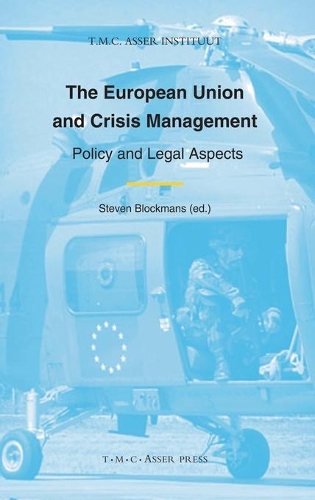
The European Union and Crisis Management :Policy and Legal Aspects
hardback
Published:
30 October, 2008
hardback
Published:
30 October, 2008

Standard worldwide delivery by
Tue, August 25 - Fri, August 28
Order within
0
Popular Books by Steven Blockmans
View All Books by Steven Blockmans




Description
After its failure to bring an end to the Balkan wars of the 1990s, the European Union has worked hard to close the infamous ‘capabilities-expectations gap’ in the field of the European Security and Defence Policy (ESDP). In a very short timeframe, the EU agreed to the following: the institution of new political and military bodies; peculiar structures and procedures to ensure political guidance and strategic direction; principles for consultation and cooperation with non-European allies and other international organisations such as the UN and NATO; measures to enhance the Union’s military and civilian capabilities; and the adoption of an acquis sécuritaire, including a European Security Strategy.
The most striking manifestation and raison d’être of the ESDP is the European Union’s capacity to move beyond the paper security structures and back its diplomatic efforts by action on the ground. With the launching of more than twenty ESDP operations inbarely five years' time, the EU has affirmed its operational capacity in ESDP. While most of the early ESDP missions were fairly successful, they have also revealed shortfalls, bottlenecks as well as broader issues in crisis management.
In this book, prominent academics and leading practitioners explore this wide variety of policy and legal aspects of ESDP and present the lessons which should be taken to heart now that the EU is facing its ‘maturity test’ as an international crisis manager in high-risk theatres around the world. The book will be an important tool for decision-makers, officials and academics involved in the further development of ESDP. Its contents incorporate the text and potential effects of the Lisbon Treaty and the ECJ’s judgment in the Small and Light Weapons/ECOWAS case.
Dr Steven Blockmans is a Senior Research Fellow in EU law and Deputy Head of Research at the T.M.C. Asser Instituut, The Hague.
The most striking manifestation and raison d’être of the ESDP is the European Union’s capacity to move beyond the paper security structures and back its diplomatic efforts by action on the ground. With the launching of more than twenty ESDP operations inbarely five years' time, the EU has affirmed its operational capacity in ESDP. While most of the early ESDP missions were fairly successful, they have also revealed shortfalls, bottlenecks as well as broader issues in crisis management.
In this book, prominent academics and leading practitioners explore this wide variety of policy and legal aspects of ESDP and present the lessons which should be taken to heart now that the EU is facing its ‘maturity test’ as an international crisis manager in high-risk theatres around the world. The book will be an important tool for decision-makers, officials and academics involved in the further development of ESDP. Its contents incorporate the text and potential effects of the Lisbon Treaty and the ECJ’s judgment in the Small and Light Weapons/ECOWAS case.
Dr Steven Blockmans is a Senior Research Fellow in EU law and Deputy Head of Research at the T.M.C. Asser Instituut, The Hague.
More Details
| Type | Book |
|---|---|
| ISBN13 | 9789067042864 |
| ISBN10 | 9067042862 |
| Number Of Pages | 458 |
| Item Weight | 1000 g |
| Publisher / Reseller | T.M.C. Asser Press |
| Format | hardback |
See More +
Media Reviews
'While its dual academic and operational nature provides a useful policy-oriented tool for scholars, decision-makers and officials, the book presents various lessons which should be taken into account now that the EU is facing its 'maturity test' as an international crisis manager.' The International Spectator
Author's Bio
Dr Steven Blockmans is senior research fellow in EU law and deputy head of research at the T.M.C. Asser Institute (The Hague).