Quantitative Aspects of Magnetospheric Physics - Geophysics and Astrophysics Monographs
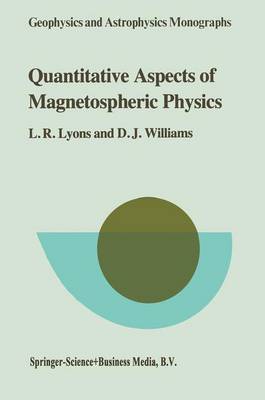
Quantitative Aspects of Magnetospheric Physics - Geophysics and Astrophysics Monographs
paperback
Published:
28 October, 2010
paperback
Published:
28 October, 2010

Standard worldwide delivery by
Tue, July 21 - Fri, July 24
Order within
0
Popular Books by D.J. Williams
View All Books by D.J. Williams

Description
The discovery of the earth's radiation belts in 1957 marked the beginning of what is now known as magnetospheric physics. The field has evolved normally from an early discovery phase through a period of exploration and into an era of quantitative studies of the dynamics of magnetized plasmas as they occur in nature. Such environments are common throughout the universe and have been studied in varying detail at the sun, the planets, pulsars, and certain radio galaxies. The purpose of this book is to describe basic quantitative aspects of magnetospheric physics. We use selected examples from the earth's magnetosphere to show how theory and data together form a quantitative framework for magnetospheric research. We have tried to organize the material along the philosophy of starting simply and adding com plexity only as necessary. We have avoided controversial and relatively new research topics and have tried to use as examples physical processes generally accepted as important within the earth's magnetospheric system. However, even in some of our examples, the question of whether the physical process applied to a particular problem is the dominant process, has yet to be answered.
More Details
| Type | Book |
|---|---|
| ISBN13 | 9789048183913 |
| ISBN10 | 904818391X |
| Number Of Pages | 231 |
| Item Weight | 1000 g |
| Publisher / Reseller | Springer |
| Format | paperback |
| Edition | 1st ed. Softcover of orig. ed. 1984 |
See More +
Media Reviews
`...no hesitation in recommending it very strongly to post-graduate students and others needing an introduction to the field, for everything contained in this book is someting a well educated post-graduate student in space physics should know.' Contemporary Physics, 155 (1985)