Energy Dissipators and Hydraulic Jump - Water Science and Technology Library
Energy Dissipators and Hydraulic Jump - Water Science and Technology Library
paperback
Published:
15 December, 2010
paperback
Published:
15 December, 2010

Standard worldwide delivery by
Fri, July 31 - Wed, August 5
Order within
0
Popular Books by Willi H. Hager
View All Books by Willi H. Hager
Description
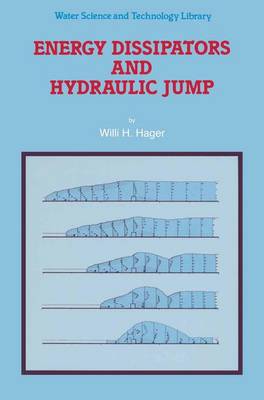
Stilling basins utili z ing a hydraulic jump for energy dissipation are w i d e l y used in hydraulic engineering . D a Vinci was the first to describe the hydraulic jump, and Bidone conducted classical experiments about 170 years ago . Stilling basins w e r e developed in the thirties with signif- cant design improvements being made during the last sixty years . Although w e l l - a c c e p t e d guidelines for a successful design are presently available, the information for the design of such dissipators is not yet compiled in book form . This book provides state-of-the-art information on hydraulic jumps and associat ed stilling basins . A large numbe r of papers on the to pics are reviewed. T h e present trends of the art of designing a stilli ng basin are discussed and ideas for future research are outlined. Design criteria and recommendat ions are frequently given . However, this should not be considered as a r eady-to -use guideline since the design of an effective stilling basin is much more comple x than following general design steps . The book is divided into two parts. Part 1 on hydraulic jumps is c- prised of chapters 2 to 5. Part 2 consisting of chapters 6 to 14 deals with various hydraulic structures used to dissipate energy. The lists of notation and references are provided in each part separately although the same notation is u sed throughout.
More Details
| Type | Book |
|---|---|
| ISBN13 | 9789048141067 |
| ISBN10 | 9048141060 |
| Number Of Pages | 290 |
| Item Weight | 1000 g |
| Publisher / Reseller | Springer |
| Format | paperback |
| Edition | 1st ed. Softcover of orig. ed. 1992 |
See More +
Media Reviews
'...the book clearly will be valuable to anyone involved in such design...it is of wider interest to fluid dynamicists as a guide to a substantial body of experimental work, and a reminder that for flows we are still a long way from reducing their study to analysis and computation.' Journal Fluid Mech. 247 (1993)