Explaining Russian Foreign Policy Behavior :Theory and Practice - Soviet and Post-Soviet Politics and Society
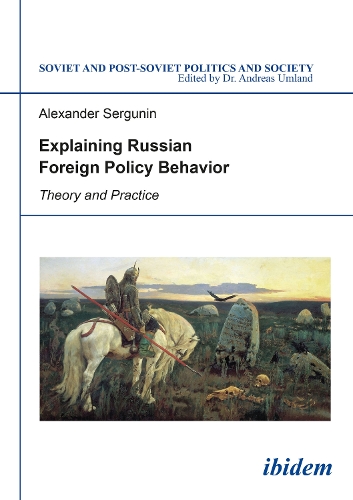
Explaining Russian Foreign Policy Behavior :Theory and Practice - Soviet and Post-Soviet Politics and Society
paperback
Published:
1 January, 2015

Popular Books by Alexander Sergunin
View All Books by Alexander Sergunin
Description
More Details
| Type | Book |
|---|---|
| ISBN13 | 9783838207520 |
| ISBN10 | 3838207521 |
| Number Of Pages | 262 |
| Item Weight | 367 g |
| Publisher / Reseller | ibidem-Verlag, Jessica Haunschild u Christian Schon |
| Format | paperback |
| Edition | New edition |
Media Reviews
"ALEXANDER SERGUNINS BOOK IS AN EXCELLENT GUIDE FOR WESTERN scholars and politicians to fully understand and analyse post-Cold War Russias foreign policy behaviour, particularly in the MiddleEast and Ukraine. Russias strong reaction to NATOs intervention in Kosovo in 1999, its offensiveagainst Georgia in 2008 to protect South Ossetia, its annexation of Crimea and support to Donbas rebels in 2014, and its unexpected military intervention in the Syrian civil war against the Islamic State in Iraq and Syria (ISIS) in 2015 are good examples of Moscows foreign policy behaviour. Sergunins book also explains that Russian foreign policy discourse aims at forming a new national identity." - Ohannes Geukjian, American University of Beirut,Europe-Asia Studies,Volume 69, Issue 4, August 2017