Everything at Once: Postmodernity 1967 - 1992
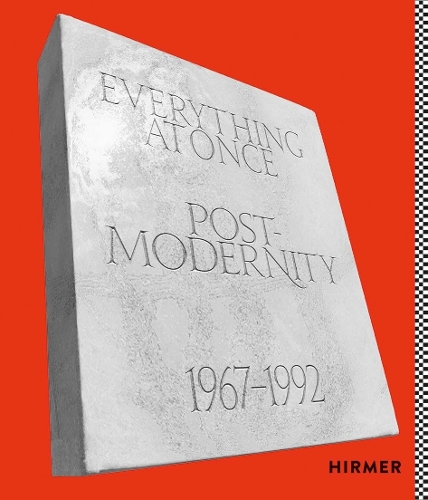
Everything at Once: Postmodernity 1967 - 1992
paperback
Published:
15 February, 2024
paperback
Published:
15 February, 2024

Standard worldwide delivery by
Tue, July 7 - Fri, July 10
Order within
0
Condition:
NEW
$49.31
RRP
$63.39
You save $14.08 (22%)
Available
2
in stock
FREE Returns within 30 days
Popular Books by Simon Kelly
View All Books by Simon Kelly



Description
Holding up a mirror to the present, the exhibition homes in on our current conflicts – from right-wing populism to identity politics. It allows us to ask, from the distance of a generation, what time we are actually living in. Is Postmodernity really over – or are we in the middle of it?
The year 1967 marked the beginning of our present: Modernism, which had presumed that everything could be sorted out through equal housing, furniture and rights for all, was abandoned, and from its ruins a bizarre, eccentric world was born. Architects declared the amusement park the new ideal city; designers shook off the yoke of good taste, and the conflict between the two dominant political systems gave way to the struggle for self-realisation. New media synchronised the globe, and images became the arena in which contests for style and recognition were waged. Showcasing spectacular examples of design, architecture, cinema, pop, philosophy, art and literature, the exhibition chronicles the dawn of the information society, the unleashing of the financial markets, the great age of subcultures, disco, punk and techno-pop, shoulder pads and Memphis furniture. It also chronicles the sudden surge in the construction of museums, the new temples of art and culture, to which we owe the largest exhibit, the Bundeskunsthalle itself. When the Bundeskunsthalle opened in 1992, the Cold War was over, and Francis Fukuyama published his famous book, in which he proclaimed ‘the end of history’ as such. Thirty years later, it is clear that history did not come to an end, and Postmodernism is once again a matter of considerable debate.
The year 1967 marked the beginning of our present: Modernism, which had presumed that everything could be sorted out through equal housing, furniture and rights for all, was abandoned, and from its ruins a bizarre, eccentric world was born. Architects declared the amusement park the new ideal city; designers shook off the yoke of good taste, and the conflict between the two dominant political systems gave way to the struggle for self-realisation. New media synchronised the globe, and images became the arena in which contests for style and recognition were waged. Showcasing spectacular examples of design, architecture, cinema, pop, philosophy, art and literature, the exhibition chronicles the dawn of the information society, the unleashing of the financial markets, the great age of subcultures, disco, punk and techno-pop, shoulder pads and Memphis furniture. It also chronicles the sudden surge in the construction of museums, the new temples of art and culture, to which we owe the largest exhibit, the Bundeskunsthalle itself. When the Bundeskunsthalle opened in 1992, the Cold War was over, and Francis Fukuyama published his famous book, in which he proclaimed ‘the end of history’ as such. Thirty years later, it is clear that history did not come to an end, and Postmodernism is once again a matter of considerable debate.
More Details
| Type | Book |
|---|---|
| ISBN13 | 9783777442761 |
| ISBN10 | 3777442763 |
| Number Of Pages | 288 |
| Item Weight | 1500 g |
| Publisher / Reseller | Hirmer Verlag |
| Format | paperback |
See More +