Use of Proxies in Paleoceanography :Examples from the South Atlantic

Use of Proxies in Paleoceanography :Examples from the South Atlantic
paperback
Published:
23 October, 2012
paperback
Published:
23 October, 2012

Standard worldwide delivery by
Tue, July 7 - Fri, July 10
Order within
0
Popular Books by Gerhard Fischer
View All Books by Gerhard Fischer







Description
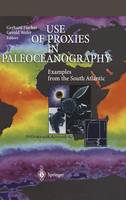
Paleoceanographic proxies provide infonnation for reconstructions of the past, including climate changes, global and regional oceanography, and the cycles of biochemical components in the ocean. These prox ies are measurable descriptors for desired but unobservable environmental variables such as tempera ture, salinity, primary productivity, nutrient content, or surface-water carbon dioxide concentrations. The proxies are employed in a manner analogous to oceanographic methods. The water masses are first characterized according to their specific physical and chemical properties, and then related to particular assemblages of certain organisms or to particular element or isotope distributions. We have a long-standing series of proven proxies available. Marine microfossil assemblages, for instance, are employed to reconstruct surface-water temperatures. The calcareous shells of planktonic and benthic microorgan isms contain a wealth of paleoceanographic information in their isotopic and elemental compositions. Stable oxygen isotope measurements are used to detennine ice volume, and MglCa ratios are related to water temperatures, to cite a few examples. Organic material may also provide valuable infonnation, e. g. , about past productivity conditions. Studying the stable carbon isotope composition of bulk organic matter or individual marine organic components may provide a measure of past surface-water CO 2 conditions within the bounds of certain assumptions. Within the scope of paleoceanographic investigations, the existing proxies are continuously evolving and improving, while new proxies are being studied and developed. The methodology is improved by analysis of samples from the water column and surface sediments, and through laboratory experiments.
More Details
| Type | Book |
|---|---|
| ISBN13 | 9783642636813 |
| ISBN10 | 3642636810 |
| Number Of Pages | 735 |
| Item Weight | 1000 g |
| Publisher / Reseller | Springer-Verlag Berlin and Heidelberg GmbH & Co. KG |
| Format | paperback |
| Edition | Softcover Reprint of the Original 1st 1999 ed. |
See More +