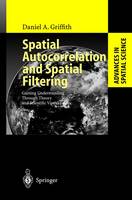
Spatial Autocorrelation and Spatial Filtering :Gaining Understanding Through Theory and Scientific Visualization - Advances in Spatial Science
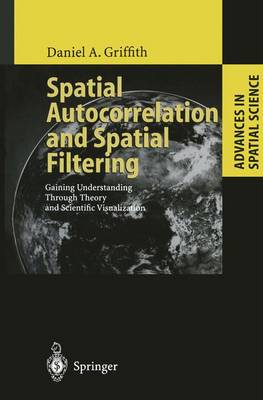
Spatial Autocorrelation and Spatial Filtering :Gaining Understanding Through Theory and Scientific Visualization - Advances in Spatial Science
paperback
Published:
5 December, 2010

Popular Books by Daniel A. Griffith
View All Books by Daniel A. Griffith
Description
Exploiting the old maxim that "a picture is worth a thousand words," scientific visualization may be defined as the transformation of numerical scientific data into informative graphical displays. It introduces a nonverbal model into subdisciplines that hitherto employed mostly or only mathematical or verbal-conceptual models. The focus of this monograph is on how scientific visualization can help revolutionize the manner in which the tendencies for (dis)similar numerical values to cluster together in location on a map are explored and analyzed, affording spatial data analyses that are better understood, presented, and used. In doing so, the concept known as spatial autocorrelation - which characterizes these tendencies and is one of the key features of georeferenced data, or data tagged to the earth's surface - is further de-mystified. This self-correlation arises from relative locations in geographic space.
More Details
| Type | Book |
|---|---|
| ISBN13 | 9783642056666 |
| ISBN10 | 3642056660 |
| Number Of Pages | 250 |
| Item Weight | 1000 g |
| Publisher / Reseller | Springer-Verlag Berlin and Heidelberg GmbH & Co. KG |
| Format | paperback |
| Edition | Softcover reprint of hardcover 1st ed. 2003 |
Media Reviews
From the reviews:
"Daniel Griffith here makes an effort to expand the methodological toolbox of spatial analysis by presenting, analyzing, and meticulously demonstrating with numerous examples, the applications of spatial filtering … . In sum, many readers will find the book an appealing source of geographic and statistical material, richly supplemented by the use of scientific visualization … . Conceivably, spatial researchers will appreciate its invigorating introduction to mathematical-geographical properties of spatial datasets, and the statisticians will enjoy its many witty and challenging examples." (Oleg Smirnov, Journal of Regional Science, Vol. 44 (3), 2004)