Classroom Struggle :Organizing Elementary School Teaching in the 19th Century - Studia Educationis Historica
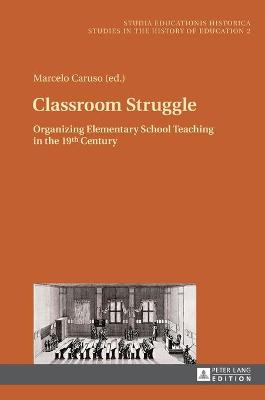
Classroom Struggle :Organizing Elementary School Teaching in the 19th Century - Studia Educationis Historica
hardback
Published:
30 April, 2015
hardback
Published:
30 April, 2015

Standard worldwide delivery by
Tue, August 4 - Fri, August 7
Order within
0
Popular Books by Marcelo Caruso
View All Books by Marcelo Caruso
Description
During the institutionalization of mass schooling in the 19th century, teaching large groups of children became both a necessity and a matter of regulation. For officials and inspectors the systematization of classroom interactions was important for effective results. However, while systematization could bring about the constant attention of children and their uninterrupted work, interactions themselves were difficult to control. Rationalized models of classroom organization provided alternatives for managing large groups before age grading became the dominant pattern of organizing interactions. The contributions in this volume explore diverse paths of transition towards modern classroom organization in different countries, allowing transnational perspectives and comparisons.
More Details
| Type | Book |
|---|---|
| ISBN13 | 9783631629253 |
| ISBN10 | 3631629257 |
| Number Of Pages | 322 |
| Item Weight | 520 g |
| Publisher / Reseller | Peter Lang AG |
| Format | hardback |
| Edition | New edition |
See More +
Media Reviews
"By paying attention to detail and context, this collection of local, regional and national analyses of teaching is an important contribution to the international history of nineteenth century pedagogical practices." (Johannes Westberg, International Journal for the Historiography of Education 1-2017)
Author's Bio
Marcelo Caruso is Professor of History of Education at Humboldt University, Berlin. His research interests focus on technologies of compulsory schooling and their transnational circulation, the transformation of educational cultures, and the historical relations between politics and education.