Inequality :Trends, Causes, Consequences, Relevant Policies - International Papers in Political Economy
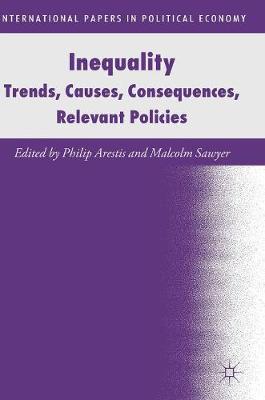
Inequality :Trends, Causes, Consequences, Relevant Policies - International Papers in Political Economy
hardback
Published:
18 September, 2018
hardback
Published:
18 September, 2018

Standard worldwide delivery by
Fri, July 31 - Wed, August 5
Order within
0
Popular Books by Philip Arestis
View All Books by Philip Arestis

Description
This book is the fifteenth volume in the renowned International Papers in Political Economy (IPPE) series which explores the latest developments in political economy. Containing contributions by experts in the field, this book focuses on topics that address the ongoing debate of inequalities in economic systems. Inequality has been considered a problem by many academics and policy makers for a long time now and recently here has been some evidence of increasing inequalities in society. Contributors to this book focus on the causes and consequences of inequality along with the importance of tackling inequality and recommend potential policies to reduce it, for example tax reforms. The book covers different aspects of inequality - from income to gender - and explores links between inequality and economic growth, and financialisation and financial crisis.
More Details
| Type | Book |
|---|---|
| ISBN13 | 9783319912974 |
| ISBN10 | 3319912976 |
| Number Of Pages | 373 |
| Item Weight | 1000 g |
| Publisher / Reseller | Springer International Publishing AG |
| Format | hardback |
| Edition | 2018 ed. |
See More +
Author's Bio
Philip Arestis is Professor and Director of Research at the Cambridge Centre for Economics and Public Policy, Department of Land Economy, University of Cambridge, UK, and Professor at the Department of Applied Economics, University of the Basque Country, Spain.
Malcolm Sawyer is Emeritus Professor of Economics, Leeds University Business School, University of Leeds, UK. He has been the principal investigator for the European Union funded (8 million euros) five year research project Financialisation, Economy, Society and Sustainable Development, involving 15 partner institutions across Europe and more widely (www.fessud.eu).