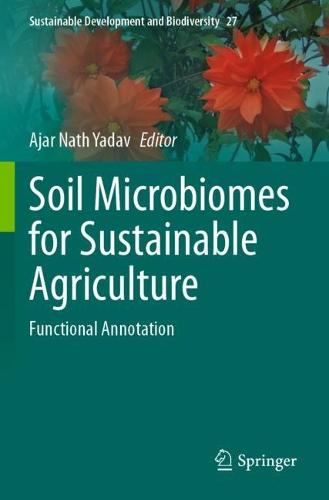
Soil Microbiomes for Sustainable Agriculture :Functional Annotation - Sustainable Development and Biodiversity
Soil Microbiomes for Sustainable Agriculture :Functional Annotation - Sustainable Development and Biodiversity
paperback
Published:
30 June, 2022
paperback
Published:
30 June, 2022

Standard worldwide delivery by
Thu, July 30 - Mon, August 10
Order within
0
Condition:
NEW
$197.72
RRP
$241.29
You save $43.57 (18%)
Available
20+
in stock
FREE Returns within 30 days
Popular Books by Ajar Nath Yadav
View All Books by Ajar Nath Yadav
Description
This book encompasses current knowledge of soil microbiomes and their potential biotechnological application for plant growth, crop yield, and soil health under the natural as well as harsh environmental conditions for sustainable agriculture. The microbes are ubiquitous in nature. The soil is a natural hotspot of the soil microbiome. The soil microbiome plays a critical role in the maintenance of global nutrient balance and ecosystem functioning. The soil microbiomes are associated with plant ecosystems through the intense network of plant–microbe interactions. The microbes present in bulk soil move toward the rhizospheric region due to the release of different nutrients by plant systems. The rhizospheric microbes may survive or proliferate in rhizospheric zone depending on the extent of influences of the chemicals secreted into the soil by roots. The root exudates contain the principal nutrients factors (amino acids, glucose, fructose, and sucrose). The microbes present in rhizospheric region have capabilities to fix atmospheric nitrogen, produce different phytohormones, and solubilize phosphorus, potassium, and zinc. The plant systems take these nutrients for their growth and developments. These soil and plant associated microbes also play an important role in protection of plants from different plant pathogenic organisms by producing different secondary metabolites such as ammonia, hydrogen cyanide, siderophores, and hydrolytic enzymes. The soil microbiomes with plant growth-promoting (PGP) attributes have emerged as an important and promising tool for sustainable agriculture. The soil microbiomes promote the plant growth and enhance the crop yield and soil fertility via directly or indirectly different plant growth-promoting mechanism. The soil microbes help the plant for adaptation in extreme habitats by mitigating the abiotic stress of high/low temperatures, hypersalinity, drought, and acidic/alkaline soil. These PGP microbes are used as biofertilizers/bioinoculants to replace the harmful chemical fertilizers for sustainable agriculture and environments.
The aim of the book “Soil Microbiomes for Sustainable Agriculture” is to provide the recent advances in mechanisms of plant growth promotion and applications of soil microbiomes for mitigation of different abiotic stresses in plants. The book is useful to scientists, researchers, and students related to microbiology, biotechnology, agriculture, molecular biology, environmental biology, and related subjects.
The aim of the book “Soil Microbiomes for Sustainable Agriculture” is to provide the recent advances in mechanisms of plant growth promotion and applications of soil microbiomes for mitigation of different abiotic stresses in plants. The book is useful to scientists, researchers, and students related to microbiology, biotechnology, agriculture, molecular biology, environmental biology, and related subjects.
More Details
| Type | Book |
|---|---|
| ISBN13 | 9783030735098 |
| Number Of Pages | 634 |
| Item Weight | 1000 g |
| Publisher / Reseller | Springer Nature Switzerland AG |
| Format | paperback |
| Edition | 2021 ed. |
See More +