Sustainable Technologies for Nearly Zero Energy Buildings :Design and Evaluation Methods - Springer Tracts in Civil Engineering
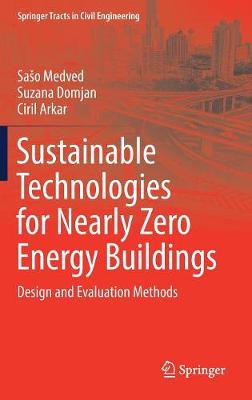
Sustainable Technologies for Nearly Zero Energy Buildings :Design and Evaluation Methods - Springer Tracts in Civil Engineering
hardback
Published:
11 February, 2019
hardback
Published:
11 February, 2019

Standard worldwide delivery by
Tue, July 7 - Fri, July 10
Order within
0
Popular Books by Saso Medved
View All Books by Saso Medved
Description
This book presents cutting-edge work on the energy efficiency and environmental sustainability of buildings, examining EU policies, regulations and technologies for complex systems such as passive buildings, sustainable buildings and, as part of the Energy Performance of Building Directive (EPBD), nearly Zero Energy Buildings (nZEB) requirements. It explores a wide range of topics, including indoor environment requirements, building physics, in-situ experiments to determine the thermal properties of buildings, nZEB requirements, building service technology, and methods of evaluating energy efficiency and environmental impacts. It also provides an overview of the best available technologies for nZEB, including those for the rational use of energy, utilization of renewable energy sources, EPBD systems and calculation methods. This book is a valuable resource for students, researchers and practitioners of urban planning, and architecture, civil and mechanical engineering.
More Details
| Type | Book |
|---|---|
| ISBN13 | 9783030028213 |
| ISBN10 | 3030028216 |
| Number Of Pages | 388 |
| Item Weight | 1000 g |
| Publisher / Reseller | Springer Nature Switzerland AG |
| Format | hardback |
| Edition | 2019 ed. |
See More +
Author's Bio
Sašo Medved is full professor and head of the Laboratory for Sustainable Technologies in Buildings at the University of Ljubljana, Slovenia. His research focuses on transformation of renewable energy sources, environmental engineering, building physics, the heat and mass transfer in urban environments, mitigating climate change.