John Cecil Stephenson: A Modernist in Hampstead
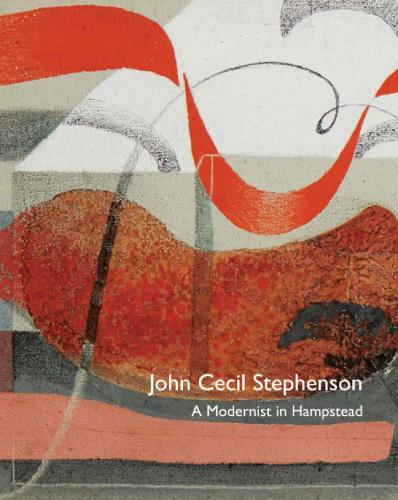
John Cecil Stephenson: A Modernist in Hampstead

John Cecil Stephenson: A Modernist in Hampstead

paperback
Published: 15 March, 2022
Standard worldwide delivery by Thu, June 18 - Tue, June 23
Order within 0
Condition: NEW
$19.66
RRP $20.01
You save $0.35 (2%)
Price includes shipping
Available 2 in stock
- +
FREE Returns within 30 days

Description

By the end of John Cecil Stephenson’s art school training – first a scholarship to Leeds Art School then to The Royal College of Art – he was in a position to produce still lives, landscapes and portraits in a professional capacity. Like many painters of his generation, who had received similarly conventional instruction, he became a competent teacher, appointed in 1922, as Head of Art at The Northern Polytechnic. In this mould Stephenson might have remained a largely undistinguished painter – but in the early 1930s he found himself at the centre of a group of artists with avant-garde credentials, and his own art underwent a remarkable transformation.   By 1934 he was exhibiting groundbreaking works such as Mask (CAT. 7), at the 7 & 5 Society, and in 1937 was a key contributor to the watershed publication and exhibition Circle, where his work was showcased alongside that of luminaries such as Kazimir Malevich, Le Corbusier, Fernand Léger, Alberto Giacometti and Pablo Picasso. What led Stephenson to become, in the words of the celebrated art critic Herbert Read, ‘one of the earliest artists in the country to develop a completely abstract style’?   Between March 1919 and November 1965, John Cecil Stephenson lived in London at No. 6 Mall Studios, off Tasker Road, Hampstead. As the father figure of what Read christened ‘a nest of gentle artists’, his next door neighbours included, during the course of the decade leading up to World War II, Barbara Hepworth, John Skeaping, Ben Nicholson and Henry Moore. Such fertile ground was further enriched by visits from artists fleeing persecution – including Piet, László Moholy-Nagy and Alexander Calder – just a few of the many internationally acclaimed artists who, whilst passing through London, formed part of the art set who congregated around Read’s house at No. 3 Mall Studios.
See more

More Details

Type Book
ISBN13 9781999314569
ISBN10 1999314565
Number Of Pages 96
Item Weight 1000 g
Publisher / Reseller Liss Llewellyn
Format paperback
See More +

GoodReads Reviews

Author's Bio

Born in Stafford in 1965, Paul Liss is a fine art dealer and exhibition organiser. He joined Sotheby’s as a Bursary student prior to working for Hazlitt, Gooden & Fox. He has created numerous catalogues/exhibtions such as Stanley Lewis (Cecil Higgens, 2010), Alan Sorrell (John Soane Museum, 2013) Evelyn Dunbar (Pallant House, 2015), WWI and WWII (Morley Gallery London, 2014 and 2016). He founded Liss Llewellyn Fine Art in 1991. Peyton Skipwith is an independent fine art consultant and Brian Webb is a designer and lecturer. Together, they are the authors of Edward Bawden’s London (2011), Edward Bawden Scrapbooks (Lund Humphries, 2016) and numerous other publications on British design including books featuring the work of Paul and John Nash, David Gentleman, Peter Blake and the Curwen Press.

Show more