I Am Alien to Life :Selected Stories - McNally Editions
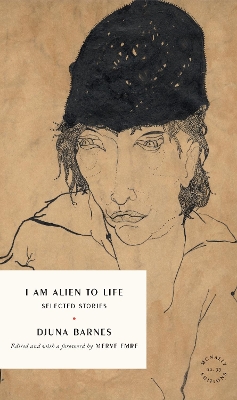
I Am Alien to Life :Selected Stories - McNally Editions
paperback
Published:
18 November, 2024

Popular Books by Djuna Barnes
View All Books by Djuna Barnes

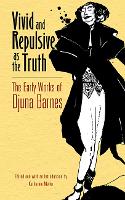
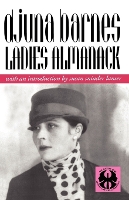
Description
More Details
| Type | Book |
|---|---|
| ISBN13 | 9781961341227 |
| ISBN10 | 1961341220 |
| Number Of Pages | 240 |
| Item Weight | 1000 g |
| Publisher / Reseller | McNally Jackson Books |
| Format | paperback |
Media Reviews
“Like a dark lesbian genius rolling in a giant heap of damp, dead leaves.”
—Eileen Myles
“The great achievement of a style, the beauty of phrasing, the brilliance of wit and characterisation, and a quality of horror and doom very nearly related to that of Elizabethan tragedy.”
—T. S. Eliot
“Barnes's prose is the only prose by a living writer which can be compared with that of Joyce, and in one point it is superior to his: in its richness in exact and vivid imagery ... A style which is inevitable and inventive at the same time.”
—Edwin Muir
“Djuna Barnes's 1920s and ’30s Paris is on the cusp of leaving behind forever the haute world of Henry James, taken from Proust. That is a world where the better people dine in the Bois, and where open horse-drawn carriages still circle the park . . . Humans suffer and, gay or straight, they break themselves into pieces, blur themselves with drink and drugs, choose the wrong lover, crucify themselves on their own longings and, let's not forget, are crucified by a world that fears the stranger—whether in life or in love.”
—Jeannette Winterson
“Djuna Barnes is a writer of wild and original gifts . . .To her name there is always to be attached the splendor of Nightwood, a lasting achievement of her great gifts and eccentricities—her passionate prose and, in this case, a genuineness of human passions.”
—Elizabeth Hardwick
“Her themes are love and death, especially in Paris and New York; the corruption of nature by culture; the tainted innocence of children; and the mute misery of beasts . . . her characters may be alien to life, but they are alive—spectacularly, grotesquely alive.”
—Merve Emre, from the foreword
“The high priestess of modernism emerges in dark lyrical tales of disaffection and alienation. With their cosmopolitan settings and points of view, Barnes's mature work displays all the ambiguity, world weariness, and cynicism that distinguish Nightwood (1936), her dense, elusive modern masterpiece.”
—Kirkus Reviews
“Barnes writes of her characters as if they were animals in the pages of a biology textbook, suddenly appearing in a dictionary of Greek gods . . . People are the worshipped or despised creations of a harsh mind. They become things with properties, diseases with symptoms, almost: they are made mythical as we read.”
—Gaby Wood, London Review of Books
“Barnes has gone beyond Mrs. Woolf’s practice of her own theory . . . For Barnes is not even concerned with the immediate in time that fascinated the stream-of-consciousness novelists. In her novel poetry is the bloodstream of the universal organism, a poetry that derives its coherence from the meeting of kindred spirits . . . it is the pattern of life, something that cannot be avoided.”
—Alfred Kazin, The New York Times Book Review
“A cult writer whose melodramatically unhappy life brought her into the Left Bank orbit of expatriate authors ranging from James Joyce to Gertrude Stein, Barnes employed an elliptical, sometimes surrealistic style as an elaborate screen for the autobiographical sources and raw pain that lie behind much of her work.”
—Publishers Weekly
Author's Bio
Djuna Barnes (1892–1982) was born on Storm King Mountain in New York State. She worked as a journalist during World War I before leaving the United States to spend the inter-war years in Paris and London among the most celebrated writers and artists of the twentieth century. She returned to New York in 1941 and lived in Greenwich Village until her death. She published three novels as well as short fiction, nonfiction, poetry, skits, and a three-act play between 1914 and 1950. Merve Emre is the Shapiro-Silverberg Professor of Creative Writing and Criticism at Wesleyan University and a contributing writer at the New Yorker.