Indigenous Ecocinema :Decolonizing Media Environments - Salvaging the Anthropocene
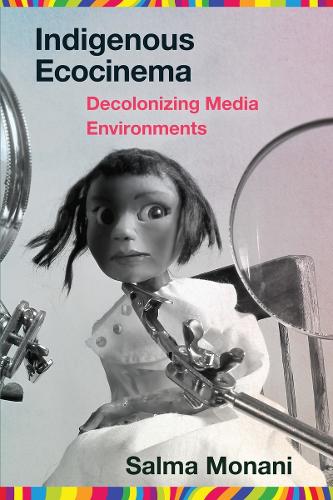
Indigenous Ecocinema :Decolonizing Media Environments - Salvaging the Anthropocene
paperback
Published:
1 December, 2024

Popular Books by Salma Monani
View All Books by Salma Monani
Description
This absorbing text is the first book-length exploration foregrounding the environmental dimensions of cinema made by Indigenous peoples, including a particularly fascinating discussion on how Indigenous cinema’s ecological entanglements are a crucial and complementary aspect of its agenda of decolonialism.
More Details
| Type | Book |
|---|---|
| ISBN13 | 9781959000334 |
| Number Of Pages | 216 |
| Item Weight | 454 g |
| Publisher / Reseller | West Virginia University Press |
| Format | paperback |
Media Reviews
“Indigenous Ecocinema is a deeply considered, meticulously researched, and cogently reasoned text. Monani’s approach to Indigenous cinema is situated within multiple critical conversations while maintaining a clear and consistent original intervention. She engages cinema from a variety of angles, not limiting herself to the ‘text’ of the film itself, but also considering the filmmakers’ contexts as well as the influence of the venue and audience participating in the screening. I found this study to be compelling and exciting.” — Amy Hamilton, author of Peregrinations: Walking in American Literature
“A much-needed addition to the fast-growing fields of Indigenous media and ecocinema studies. Well-written, with both substantive theoretical heft and, at the same time, a warm and inviting tone and a very readable style, the arguments Monani makes around issues of place, time, and affect comprise a compelling case for the centrality of Indigenous cinematic mediations of ecological consciousness.” —Joanna Hearne, author of Native Recognition: Indigenous Cinema and the Western and Smoke Signals: Native Cinema Rising
Author's Bio
Salma Monani is Professor at Gettysburg College’s Environmental Studies department. She has extensively published in ecocinema studies, Indigenous ecomedia, and environmental justice. She is co-editor of four ecocritical media anthologies. As part of her College’s Land Acknowledgment Committee, she also engages in public eco-humanities along with community research with Indigenous partners.