Pierre Mac Orlan - Mademoiselle Bambu
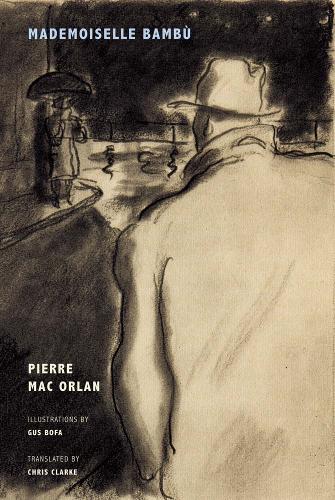
Pierre Mac Orlan - Mademoiselle Bambu
paperback
Published:
24 October, 2017
paperback
Published:
24 October, 2017

Standard worldwide delivery by
Tue, July 28 - Fri, July 31
Order within
0
Condition:
NEW
$25.39
RRP
$27.80
You save $2.41 (9%)
Available
10
in stock
FREE Returns within 30 days
Popular Books by Pierre Mac Orlan
View All Books by Pierre Mac Orlan
Description
Mademoiselle Bambù is Pierre Mac Orlan’s take on the spy novel, written and expanded between 1932 and 1966. Set in Hamburg, London, Palermo, Brest and other ports of call in the anxious Europe of the 1920s and 1930s, Mademoiselle Bambù tells the tales of three secret agents: the melancholic adventurer and accidental spy, Captain Hartmann; his enigmatic mistress from Naples (and a double agent for the Germans), Signorina Bambù; and the sinister Père Barbançon, who retires from his life of espionage and murder to eke out his troubled days in an aptly named “Boarding House of Usher,” where shadows are as likely to strangle a man as they are to haunt him. Like all of Mac Orlan’s novels, Mademoiselle Bambù is less a novel than a barometer of societal unease, crippling melancholy and dark humor. Pierre Mac Orlan (1882–1970) was a prolific writer of absurdist tales, adventure novels, flagellation erotica and essays, as well as the composer of a trove of songs made famous by the likes of Juliette Gréco. A member of both the Académie Goncourt and the Collège de ’Pataphysique, Mac Orlan was admired by everyone from Raymond Queneau and Boris Vian to André Malraux and Guy Debord.
More Details
| Type | Book |
|---|---|
| ISBN13 | 9781939663252 |
| ISBN10 | 1939663253 |
| Number Of Pages | 240 |
| Item Weight | 1000 g |
| Publisher / Reseller | Wakefield Press |
| Format | paperback |
See More +
Media Reviews
[Bofa's] drawings suggest the existential darkness that overtook a Europe defaced by war and modernization. The illustrations he made for Mac Orlan’s moody novel of espionage Mademoiselle Bambù—of spies, prostitutes, sailors, and drifters—compliment the tale of a web of interconnected characters as they circulated around Europe’s port cities, a depiction of the dark unease of the early twentieth century. * The New York Review of Books *