THE FESTIVAL OF BRIGIT :Celtic Goddess and Holy Woman
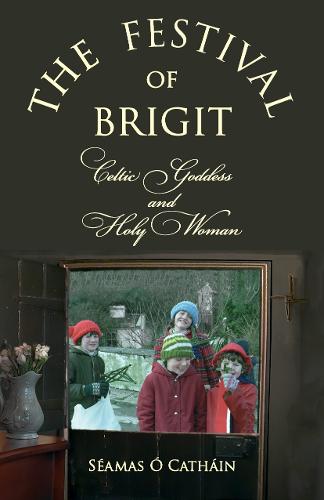
THE FESTIVAL OF BRIGIT :Celtic Goddess and Holy Woman
paperback
Published:
3 January, 2023

Popular Books by Seamas OCathain
View All Books by Seamas OCathain
Description
Prizes
Winner of Royal Gustavus Adolphus Academy Award 2022
More Details
| Type | Book |
|---|---|
| ISBN13 | 9781908420329 |
| Number Of Pages | 296 |
| Item Weight | 375 g |
| Product Dimensions | 140 x 216 x 17 mm |
| Publisher / Reseller | Phaeton Publishing Limited |
| Format | paperback |
| Edition | 2nd edition |
Media Reviews
"... A fascinating read, showing the complexity and strength of oral traditions and the very strong links between belief and material culture, a link that archaeologists are sometimes inclined to ignore as opposed to trying to come to terms with its complexity, as Professor OCathain has done so successfully here." -Archaeology Ireland; "...this is an interesting and stimulating book, fascinating in its detail..." -Edinburgh University Press; "... some very interesting aspects of the celebration of Brigit emerge, some of which the author considers, others of which will prompt investigation by other researchers. The extent to which this volume can excite, by its citation of sources, and its bringing together of analogues, is a tribute to the author." -Nordic Yearbook of Folklore.
Author's Bio
Dr Seamas OCathain was educated at Queen's University Belfast, where he became Professor of Celtic. Later he was appointed Professor of Irish Folklore at University College Dublin, and Director of Ireland's National Folklore Collection. He has edited and authored numer ous books on the folklore of Ireland and north-western Europe, including Uair a Chloig cois Teallaigh /An Hour by the Hearth (Comhairle Bhealoideas Eireann : 1985); The Festival of Brigit first edition, (DBA Dublin: 1995); Gaelic Grace Notes (Novus Press, Oslo : 2014); and his autobiography Jumping the Border (Phaeton: 2018) also published in Irish as De Leim thar Teorainn (Phaeton: 2020). He is the editor of Northern Lights : Following Folklore in North-Western Europe (UCD Press : 2001), and joint editor of Treasures of the National Folklore Collection /Seoda as Cnuasach Bhealoideas Eireann (Four Courts Press : 2010), He has received many distinctions and literary awards, including Knight (First Class) of the Order of the Lion of Finland; the Dag Stromback Prize of the Gustavus Adolphus Academy, Uppsala, Sweden; the Ruth Michaelis-Jena Ratcliff Prize, Edinburgh, and an award in 2022 from the Royal Gustavus Adolphus Academy for his contributions to Nordic-Celtic cultural connections.