Made in Niugini :Technology in the Highlands of Papua New Guinea - The Royal Anthropological Institute Series
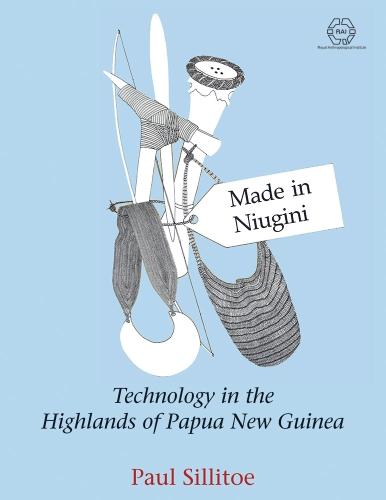
Made in Niugini :Technology in the Highlands of Papua New Guinea - The Royal Anthropological Institute Series
hardback
Published:
30 November, 2017

Popular Books by Paul Sillitoe
View All Books by Paul Sillitoe
Description
More Details
| Type | Book |
|---|---|
| ISBN13 | 9781907774898 |
| ISBN10 | 1907774890 |
| Number Of Pages | 662 |
| Item Weight | 1713 g |
| Product Dimensions | 210 x 273 x 36 mm |
| Publisher / Reseller | Sean Kingston Publishing |
| Format | hardback |
| Edition | 2nd New edition |
Media Reviews
What a stunning and rewarding book! Te Rangi Hiroa, C.S. Ford, Darryl Forde, Clark Wissler and Edward Gifford - to mention a few of my earlier friends and teachers - would all have enjoyed this work immensely. Harold C. Conklin. Not many anthropologists could have brought to fruition a work like this. Its singleness of purpose offers what amounts to a unique perspective on Papua New Guinea Highland life ... It will be a work of reference for Melanesianists. But social anthropologists in general should take note. The relentlessness of Sillitoe's investigation has its own effect. It throws up quite unexpected detail: the chert knappers' care that people will not cut their feet on fragments, the different times it takes men to tease their hair into wigs, why barbed arrows are feared ... the number of skirts a woman needs to feel adequately attired ... [A] magnificent epic to human endeavour. Regardless of whether they hold collections from Melanesia, this should be in the library of every ethnographic museum: and regardless of whether they think they are interested in material culture, this should be available to every anthropology department. Marilyn Strathern, Man. Made in Niugini is an extraordinarily ambitious and finely executed account, encyclopedicin scope and design, and expertly illustrated. Thomas G. Harding, American Anthropologist.
Author's Bio
Paul Sillitoe FBA is Professor of Anthropology at Durham University. His research interests focus on tropical farming systems and indigenous natural resource management strategies. He specialises in development and social change, subsistence and technology, land issues, human ecology and ethno-science. His regional interests focus on the Pacific in particular. He has conducted extensive fieldwork in Papua New Guinea, where he first championed the competitive sociability of institutionalised exchange individualism, and he is currently involved in projects in South Asia, researching local agricultural knowledge and development programmes. He seeks to further the incorporation of indigenous knowledge in development, particularly in the context of sustainable livelihood initiatives and appropriate technologies.