
0.5Kg of CO2

62 litre(s) of Water

0.0037 Tree(s)

1 book donated to global literacy projects
Selected Poems
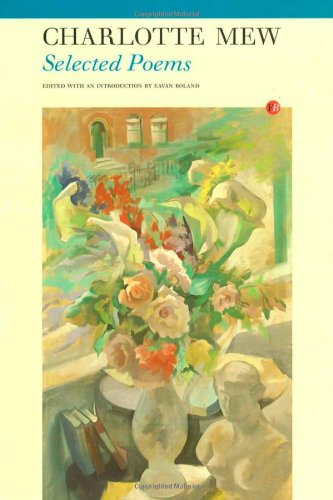
Selected Poems
paperback
Published:
27 March, 2008


Popular Books by Charlotte Mew
View All Books by Charlotte Mew
Description
More Details
| Type | Book |
|---|---|
| ISBN13 | 9781857549621 |
| ISBN10 | 1857549627 |
| Number Of Pages | 124 |
| Item Weight | 100 g |
| Product Dimensions | 6 x 216 x 140 mm |
| Publisher / Reseller | Carcanet Press Ltd |
| Format | paperback |
Media Reviews
The greatest living poetess. Virginia Woolf
Author's Bio
Charlotte Mew was born in London in 1869, the third child of an architect, and was educated at a girl's school in London. Her first published work was a short story in The Yellow Book in 1894. In May 1912 Mew was introduced to May Sinclair, a leading novelist who was active in the women's suffrage movement. Mew fell in love with her, but although Sinclair encouraged her writing; she did not reciprocate Mew's feelings and the relationship eventually broke up. The period from 1913 was one of the most productive periods for Mew's poetry, however, and she became an increasingly published and admired poet. Living with her mother and sister Anne, an artist, in difficult circumstances, Mew found freedom and inspiration on holidays in France and Belgium. In 1923 she was awarded a Civil List pension on the recommendation of John Masefield, Walter de la Mare and Thomas Hardy. A fear of hereditary mental illness had led Mew and her sister to vow not to marry: both her elder brother and another younger sister had been taken to mental hospitals. In 1927, still grieving from the death of her sister, Mew killed herself, possibly because she feared the onset of insanity.