The Parthian Stations
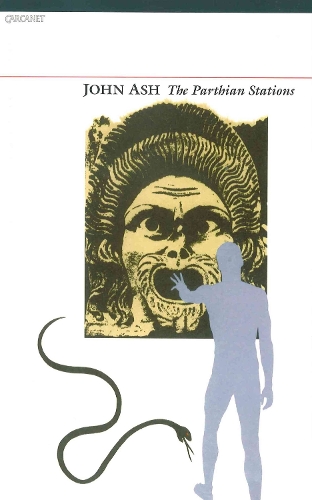
The Parthian Stations
Paperback
Published:
26 April, 2007

Popular Books by John Ash
View All Books by John Ash

Description
More Details
| Type | Book |
|---|---|
| ISBN13 | 9781857548723 |
| ISBN10 | 1857548728 |
| Number Of Pages | 106 |
| Item Weight | 154 g |
| Product Dimensions | 135 x 216 x 8 mm |
| Publisher / Reseller | Carcanet Press Ltd |
| Format | Paperback |
Media Reviews
The Economist
Poetic inspiration
A Byzantine journey
Back in the days when John Ash was a rising English poet of the New York School, critics either loved his stiletto wit or loathed it as 'camp disdain'. Mr Ash's new book, The Parthian Stations', shows how a decade of living in Istanbul, studying the heritage of Byzantium and travelling in the Middle East has sharpened both his eye and the claws of his feline black comedy. Meanwhile, any disdain he may have felt in the past at the politics he observes around him has matured into a deep and incisive anger.
The Parthian Stations - named after a caravan route between the Mediterranean and India that was described by a Basra geographer in the 1st century BC - displays Mr Ash's talent for integrating contemporary Middle Eastern events into a classic English poetic frame. He condemns the ruler of Syria, for instance, for retaining the holes made by bullets fired during the 1982 Hama massacre - and then building a hotel on the bulldozed remains of the ancient city centre.
Out of crushed bones and corrupted
flesh a white, pyramidal hotel
rose in the balconied stages. Cursed.
When Mr Ash's 2004 collection, To The City, came out, Poetry, a leading American poetry magazine, said that he 'could be the best English poet of his generation'. Now he may also be the doyen of a new 'Istanbul School'.
Several English-speaking poets are publishing work that, like Mr Ash's, use the city as a vivid background against which to weave together themes of East and West. There is the easy fluidity of Sidney Wade of Florida, the wry melancholy of Mel Kenne of Texas and the keen eye of Alabama's late Daniel Pendergrass for the theatre of the streets. James Wilde, a Canadian, writes savagely of war, Edward Foster pens gay odes and George Messo, an Englishman, is working on an epic.
By day, many of these poets teach English in Turkey's burgeoning private colleges. Some meet regularly, others share a new literary periodical and two recently produced a Turkey supplement for the Atlanta Review. Several translate Turkish verse into English. Turkish respect for poetry goes back to Ottoman times, when, according to Walter Andrews, a translator, 'almost everyone, from the ruler to the peasant, from the religous scholar to the rake and drunkard, aspired to be a poet.'
Tony Frazer, whose Shearsman Books is one of a number of publishers now interested in poems about Turkey, believes that the country exerts a unique and powerful influence. He gives the counter-example of expatriate British and American poets in Germany, who 'might as well be in Leicester or Peoria for all the impact that Germany has had on their work.'
The son of a schoolteacher, Mr Ash, 58, lived until 20 years ago in his hometown, Manchester. Just as he was achieving recognition in Britain he left for America as protege of John Ashbery, a leader of the avant-grade New York School.
In his new book, Mr Ash writes that he moved to Istanbul partly to be in a land of Muslim calls to prayer, 'to shuck responsibility, to imagine I was not Western, not Christian and free.' He found a new patron, Selcuk Altun, a Turkish banker-turned-novelist who supported him for three years. Istanbul recalls Paris of a century ago, a place where expatriate writers can find liberty, affordable living and exotic surroundings. However, Mr Ash, who likes to sip aniseed-flavoured raki instead of absinthe, rejects the comparison. 'I just like cities on the verge of chaos', he says. 'Istanbul was one of the few places that wouldn't seem boring after New York.'
His book is by turns autobiographical and whimsical. The narratives are accessible, whether meditating on the spontaneity with which he writes or on the sudden death of his sister. Above all, Mr Ash engages with Istanbul, the former Constantinople - 'an antechamber of Asia a place of distances and perspectives'.
A voracious reader, with a passion for Byzantine history, Mr Ash takes a long (and not altogether favourable) view of America's role in the region's conflicts.
The auguries, the inaugurations
Proceed at vast expense, banquet after banquet.
A fire of the mind is invoked, and this is what
We must live with as the century raises itself
On cribbled limbs to proclaim victory.
Neither Alexander nor Trajan combined
Such arrogance with ignorance
But, in the end, what difference does it make?
Persepolis burned, and Fallujah is emptied.
William Wootten, the Guardian, 19 May 2007
The Parthian Stations
John Ash's poetry might seem an indulgence. Are modern poets really allowed to make such plangent music, to evoke such great nostalgias and melancholy, and if so, are they also allowed to be so chatty and occasional, so humorous and urbane?
Earlier in Ash's career, the answer was unclear. In his native Manchester, then in New York, where he lived between 1985 and 1996, Ash could seem too much in the shadow of his influences (it wasn't just the name that brought to mind John Ashbery) - a promising poet who had not really found the subjects and emotional depth to fit his talent. Yet the poetry he has published since moving to Istanbul 11 years ago has been singular and winning. Full of elegance and poise, properly elegiac and alluding to real, as well as imagined, losses and absences, the poems are by turns beautiful, entertaining and moving. They have also become flavoured with Greek, Turkish and Persian influences and rich with the history and landscapes of Anatolia and the Middle East.
Ash doesn't pretend to be particularly moral or even particularly nice - there are some spectacularly vicious maledictions thrown at people he has taken against. Nevertheless, he is a humane, compassionate poet with a sharp moral sense. When he contemplates a joyful photo of himself, a sister and two friends in a fancy hotel, he can't help but think of the bored waiter who had to take a picture recording 'the wealth and happiness of strangers'. An elegy confesses that Ash resented the fact that another sister, who taught poetry, didn't seem to care for his verse. When he goes on to describe her death in a car accident, he is as unsparing of himself and his vanity as her death was: 'The dog survived, but you did not, / and now I complain merely because / your silence bruised my self-esteem.'
Whether through war, the tsunamis of 2004, or the destruction of the Twin Towers, the 21st century has given The Parthian Stations much to mourn. It has also turned Ash into a far more political poet, even in his travel plans: 'There is war in Afghanistan. / To signal my disapproval / I plan to visit Beirut soon. / My god, what a hero!'
Elsewhere, Ash invokes a more exalted rhetoric as he compares western imperialists of past and present, and shows his contempt for Bush and Blair. Yet history offers little comfort:
Neither Alexander nor Trajan combined
such arrogance with ignorance
but, in the end, what difference does it make?
Persepolis burned, and Fallujah is emptied.
So, Ash will tend to swing between anger and mourning and a grand despair at the rise, fall and follies of empire.
The title poem tells of ancient Parthia and its clashes with Rome. As he contemplates forgotten names of places that signify 'the people dying in their thousands, / corpses uncounted under the rubble', he laments ignorance of the past and the east, the casualties of Afghanistan and Iraq as well as of the Roman age. He also acknowledges how difficult it is to avoid failures of sympathy and understanding, to feel for so many dead.
Poems such as 'The Parthian Stations' or 'Hotel Seferis', which records the fate of Smyrna in 1922, make it clear that Ash can be a history poet of considerable seriousness. But he will also play old meets new, east meets west, for laughs, camply wondering if the 'many American males / called Brad (Gooch, Pitt, Morrow) / are aware that their name is also / the name of the largest Byzantine town in northern Syria".
Ash, an admirer of the Greek philosopher Epicurus, and something of an epicure, takes his pleasures seriously. He praises the Muslim poet Rumi not just for his tolerance, but because Ash believes that 'the wine he speaks of should not be / interpreted metaphorically'; he also laments the west's 'banal conceptions of luxury'.
Ash's own sense of luxury might be a trifle overdeveloped, but it certainly isn't banal. 'Luxury' finds him losing a beautiful coat he has inherited from his father, then unexpectedly getting it back and plunging his arms into its sleeves: 'there was nothing I could do, and nothing / I couldn't.' Luxury becomes much more than a fine garment: it is a particular sensuous delight, present against a backdrop of loss.
Ash best savours pleasures that are brief, that bring death to mind and have a sense of lack. It's a description that suits his secular delight in listening to the muezzin in Istanbul, just as it suited his smoking in New York. It's also a good description of the pleasures of the short poems that make up most of this collection. 'Why are short poems sad,' he asks, 'even when they evoke good weather / and agreeable hours spent loafing in cafés?' It must have something to do with how they 'should be short enough to fit / in chiselled letters on a tombstone'.
The first century B.C. Stations describes trading towns between Antioch and western India, ignoring the colourful Parthians. The title poem of Ash’s ‘Stations’, his seventh collection, highlights the panache and genius of this warrior people, a reminder that his map is impressionistic, less concerned with facts than with how art defines or transmutes experience. More broadly, though, this sequence comes to terms with an alien culture that submerges historic associations which can seem perplexingly more familiar than the current scene. Arriving in Turkey and sailing along its coast evokes qualified excitement. Note the discursive style and ambiguous simile. Ash excels at this kind of finale.
What was it we were about to find,
and what would we fail to find
on disembarking in blue Bithynia?
To all appearances unbruised,
innocence had been restored to us
like a pearl lost in the back of a taxi.
(‘Arrival III (Departure)’)
The ongoing travel/arrival structure also suggests that you can purge and abandon your life, but its mental luggage may weigh all the more among fresh perspectives, adding to the mind’s warfare of memories and impressions. Ash emphasises this well by fragmenting ruminations over characters, places, and the process of writing, into displaced numbered poems. Their contents develop in his mind like recurring threads but with new tinctures. A particularly fine mixture of elegy and humour colours his relations with an eccentric aunt, an alienated sister, and an unfathomable, culture-vulture friend.
The persona’s displacement can evoke apparently absurd cross-cultural comment. For instance, do Americans called Brad appreciate their identification with a lost Byzantine city in N. Syria? The response he’d like to hear in his lonely search (and won’t) hints at an unbridgeable gulf: ‘…that flat monosyllable would be / associated with great architecture / and the abandonment, many centuries / ago, of vineyards and olive groves…’ (‘Brad’)
In contrasting or highlighting a sense of place Ash lets architecture speak for itself. He sees two blind men, arms linked, singing a folk song, greeted kindly with coins:
You know you’re not in Manchester,
and you heave a profound sigh
of gratitude, but don’t forget
the sorrow in the turnings
of the street, in dusty windows,
and fractured architraves over them.
(‘Gratitude’)
Here typically we feel what it is like to observe and not see. The poem ‘Things’ (one of several ironic apologias) declares: ‘…these names and feelings and places / …exist / in no observable dimension…’ An impression reinforced by the predominant scepticism of the poems. Though there is every tonal nuance from anger to tenderness, Ash consistently rebuffs clichés and shibboleths. This might pall were it not complemented by a honed, accessible and well-crafted arrhythmic style.
John Ash’s new book is not ‘fiendishly gay / (in both senses of the term)’. In fact, he apologizes at the end for so many poems alluding to war and death, but that’s because he ‘could not, / after all, misrepresent life’, and in our time the honest poem must acknowledge that ‘The corpse’s watch is still ticking’. Ash has been called the best English poet of his generation, and I have no argument with that assessment. He has the clarity, intellectual liveliness, and sad sense of history that one finds in the great Greek poet C.P. Cavafy. Now living in Turkey, Ash, like Cavafy, sits at the edge of an empire, at the corner of the Mediterranean, watching the Great Powers in their stupidity and greed grind up the lives not only of the humans they dedicated themselves to ‘protect’, but of the very cultures in whose name they destroy. The longest poem in this collection of rather short works is ‘Hotel Sefaris’, about searching out the home of yet another Greek poet whose world was destroyed by war.
The first century B.C. Stations describes trading towns between Antioch and western India, ignoring the colourful Parthians. The title poem of Ash’s ‘Stations’, his seventh collection, highlights the panache and genius of this warrior people, a reminder that his map is impressionistic, less concerned with facts than with how art defines or transmutes experience. More broadly, though, this sequence comes to terms with an alien culture that submerges historic associations which can seem perplexingly more familiar than the current scene. Arriving in Turkey and sailing along its coast evokes qualified excitement. Note the discursive style and ambiguous simile. Ash excels at this kind of finale.
What was it we were about to find,
and what would we fail to find
on disembarking in blue Bithynia?
To all appearances unbruised,
innocence had been restored to us
like a pearl lost in the back of a taxi.
(‘Arrival III (Departure)’)
The ongoing travel/arrival structure also suggests that you can purge and abandon your life, but its mental luggage may weigh all the more among fresh perspectives, adding to the mind’s warfare of memories and impressions. Ash emphasises this well by fragmenting ruminations over characters, places, and the process of writing, into displaced numbered poems. Their contents develop in his mind like recurring threads but with new tinctures. A particularly fine mixture of elegy and humour colours his relations with an eccentric aunt, an alienated sister, and an unfathomable, culture-vulture friend.
The persona’s displacement can evoke apparently absurd cross-cultural comment. For instance, do Americans called Brad appreciate their identification with a lost Byzantine city in N. Syria? The response he’d like to hear in his lonely search (and won’t) hints at an unbridgeable gulf: ‘…that flat monosyllable would be / associated with great architecture / and the abandonment, many centuries / ago, of vineyards and olive groves…’ (‘Brad’)
In contrasting or highlighting a sense of place Ash lets architecture speak for itself. He sees two blind men, arms linked, singing a folk song, greeted kindly with coins:
You know you’re not in Manchester,
and you heave a profound sigh
of gratitude, but don’t forget
the sorrow in the turnings
of the street, in dusty windows,
and fractured architraves over them.
(‘Gratitude’)
Here typically we feel what it is like to observe and not see. The poem ‘Things’ (one of several ironic apologias) declares: ‘…these names and feelings and places / …exist / in no observable dimension…’ An impression reinforced by the predominant scepticism of the poems. Though there is every tonal nuance from anger to tenderness, Ash consistently rebuffs clichés and shibboleths. This might pall were it not complemented by a honed, accessible and well-crafted arrhythmic style.
Author's Bio
JOHN ASH was born in Manchester in 1948 and read English at the University of Birmingham. He lived for a year in Cyprus, and in Manchester between 1970 and 1985, before moving to New York. Since 1996 he has lived in Istanbul. His poetry has appeared in many publications including the New Yorker, the New York Times, the Village Voice, Oasis, PN Review and Paris Review. Two of his Carcanet collections, The Goodbyes (1982) and Disbelief (1987) were Poetry Book Society Choices. He has also written two books about Turkey, A Byzantine Journey and Turkey: The Other Guide.