A Perfect V
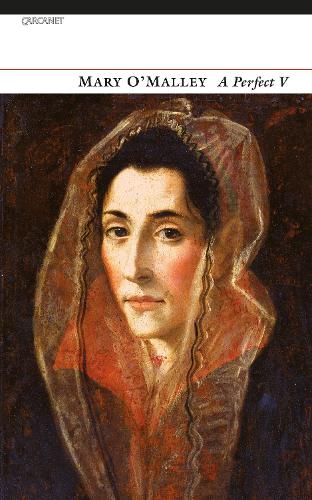
A Perfect V
paperback
Published:
27 April, 2006

Popular Books by Mary O'Malley
View All Books by Mary O'Malley
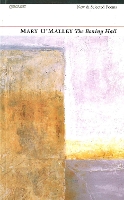
Description
A marriage breaks down, children leave home, love itself is questioned. What is home now? Where is it? And how do we live when we cannot return? The personal is examined through the lens of the greater human chaos. This is a book about eviction, an examination of the nature of home that is both private and political, written out of a sense of the barbarism that threatens to overwhelm the deep song of Ireland.
'[Mary O'Malley] is a true artist in sketching the beautiful, small details without which the essence of place, and the identity dependent on it, can be all too easily erased.' - Eavan Boland
More Details
| Type | Book |
|---|---|
| ISBN13 | 9781857548396 |
| ISBN10 | 1857548396 |
| Number Of Pages | 96 |
| Item Weight | 109 g |
| Product Dimensions | 135 x 216 x 7 mm |
| Publisher / Reseller | Carcanet Press Ltd |
| Format | paperback |
Media Reviews
Nessa O'Mahony, The Irish Times
There is a moment in the final poem of Mary O'Malley's fine new collection, A Perfect v, when a hawk catches a pover in mid-air. The encounter is sudden a lethal and becomes the perfect metaphor for the act of writing:
Language can be like this.
A fine spray of blood
like a lacquer fan, then nothing.
The hawk's attackis certainly an apt metaphor for O'Malley's writing which throughout is vivid, feral, incisive and brutal in its pursuit of the true image.
The poems in A Perfect V are about victims and survivors. there is a pervasive sense of alienation and homelessness in the first poem, 'Silence', with its assertion that 'there is nowhere to run except the edge'. This sense is sustained through the narratives of lost homes such as 'The Heart' or 'The Miracle of the Cherry tree', where the poet asks 'Where is home now?' in the wake of children leaving the nest, or husbands simply leaving.
But these are not just empty-nester poems; O'Malley seems constantly in the process of recreating or remaking identities. In 'The Shannon Stopover' the plight of the narrator, a hooded detainee en route to Guantanamo Bay, reminds us that we are all implicated in his fate: 'Give me citizenship of this planet - / at least one witness to speak for me'.
Concerns for language, how it is transmuted through history, lie at the heart of this collection. in 'Lynch', based on historical accounts of the hanging og a 15th century mayor of Galway of his own son for murder, the poet notes how the surname may have mutated into the verb used for hanging negroes in the Deep South and comments: 'Language has a diamond core...a word/ can make its way in spite of history to such a crooked truth'.
Author's Bio
Mary O'Malley was born in Connemara in Ireland and educated at University College Galway. She lived in Lisbon for eight years and taught at Universidade Nova. She served on the council of Poetry Ireland and was on the Committee of the Cúirt International Poetry Festival for eight years. She was the author of its educational programme. She taught on the MA programmes for Writing and Education in the Arts at NUI Galway for ten years, held the Chair of Irish Studies at Villanova University in 2013, and has held Residencies in Paris, Tarragona, New York, NUI Galway, as well as in Derry, Belfast. She is deeply committed to education and the preservation of marine life and culture and is active in environmental education. She is a member of Aosdána and has won a number of awards for her poetry, including the 2016 Arts Council University of Limerick Writer's Fellowship and the 2018 Michael Hartnett Poetry Award for Playing the Octopus (2016). She was the Trinity Writer Fellow at the Oscar Wilde Centre for 2019. She writes and broadcasts for RTÉ Radio regularly. She spends time in Paris and Spain and lives in the West of Ireland. Visit Mary O'Malley's website.