Ice Memory: Selected Poems
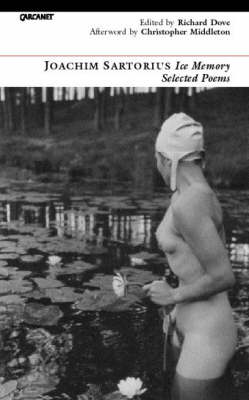
Ice Memory: Selected Poems
paperback
Published:
30 March, 2006

Popular Books by Joachim Sartorius
View All Books by Joachim Sartorius

Description
Ice Memory is the first book of poems by the German poet Joachim Sartorius to be published in English. A traveller between continents, cultures and eras, Sartorius is a poet of global reach, whose poems, full of sound and light, documenting the wealth and exhaustion of the world, are magnificently brought into English by translators from Australia, Britain and the United States. In memories and ruins, Joachim Sartorius shows how bridges can be built in a fragmented world.
More Details
| Type | Book |
|---|---|
| ISBN13 | 9781857548327 |
| ISBN10 | 1857548329 |
| Number Of Pages | 184 |
| Item Weight | 249 g |
| Product Dimensions | 135 x 216 x 14 mm |
| Publisher / Reseller | Carcanet Press Ltd |
| Format | paperback |
Media Reviews
'These poems are the messages of a person who has been a very long way away and who covers inward as well as outward distances on his travels. When reading this poetry, one is always somewhere else, not only in space but also in time.'
Cees Nooteboom
Elaine Feinstein, The Times, Saturday 25th March, 2006:
From minarets to Bleecker Street
The range of Joachim Sartorius's poetry arises naturally from an unusual life. Born in Franconia, Bavaria, in 1946, the son of diplomat, he grew up in Tunis and was educated at the Lycee de Carthage there, thus acquiring at a stroke the culture of a civilised Arab decadence and a sharp European clarity. He draws images from minarets, street cafss or the flapping sails of Mediterranean boats with equal fluency, making use both of the Bosphorus and of the Seine, where Paul Celan drowned himself in 1970.
Bleecker Street and Manhattan appear in his poetry too; but this is not poetic tourism. Sartorius is trying to make sense of the newly-understood Earth we all inhabit. In the title poem 'Ice Memory' the frozen waters hold the residues of all the disasters from the long history of the planet: volcanic ash from Krakatoa, lead pollution from Ancient Roman blast furnaces, and so on. Rather than meditating on the immensity of such an inheritance, however, men seem to have only one passion: the desire to discover some "imprint of our tiny naked feet" on the Earth's surface. The poem crackles with an ironic knowledge of human vanity.
As he explores Alexandria we sense his love of Cavafy. He imagines the city in 1903, when Ramleh was a main street in the foreigners' district, before leading us into a dark alley Cavafy might have entered when he was 40. In homage, Sartorius invents three new poems that purport to be from the Cavafy estate. His own poems have a colloquial lyricism that recalls that old master of the elegaic.
His imagination is often triggered by photographs, for instance one of Lilia Brik and Mayakovsky in Samarkand, and most notably in a poem for the Hungarian poet Jnnos Pilinszky where he evokes luminous skin stretched tightly over sharp cheekbones, as if he knew him personally, or had shared the black truths of the lager.
This is the first collection of Sartorius's poems in English, though individual poems have been appearing in magazines for some years. As a notable translator himself of American poets such as John Ashbery and Wallace Stevens, he might well have hoped this would happen earlier. He is fortunate in his translators now, however. These include Michael Hamburger, Christopher Middleton, Michael Hulse and Rosemarie Waldrop, as well as excellent versions from Richard Dove, who is the editor of the whole volume. Published with facing text in German, this is both an elegant book and an important one
Martin Box, AMBIT magazine
Carcanet, like Anvil, introduce us to the foreign writers we should know about and here produce a fine selected poems of Joachim Sartorius. He is now a professor in berlin, having been amongst other things a diplomat in New York, Instanbul, Prague and Nicosia. He also spent part of his youth outside Germany:
'I came to Tunis at the age of ten, went to the Lysee de Carthage, and - during my first winter there - discovered silver Punic coins after heavy rainfall in the pubbles in the schoolyard.'
A bilingual edition, Ice Memory draws on four collections, and is translated by a number of distinguished translators - Richard Dove, for example, the editor and a major translator - and has an afterword by Christopher middleton, also a translator. There are love poems in all four collections - like 'The First Night' from Mine is the Night (2003):
That a woman can disperse herself within me
without caring for me;
that every twilight, in order to become beautiful,
I am compelled to this room...
Not surprisingly, the mediterranean, and indeed antiquity if you like, features in many of the poems but equally there's a fine one on the death of Manhatten. Cavafy is a major influence - this from 'Cavafy contradicts Seneca' (a translation of Dove)
At home at 7 Lepsius Street,
he didn't light the lamps sa as to be able
to play all the better with forbidden
memories, images...
'On the way to the tomb of Kleoboulos' seemed a bit too contrived for me:
Now it is night, dark as night.
Now the black rolling landscape has withdrawn
from sight.
But this is more than made up for by the many very exciting poems. The range, as Middleton notes in his script, is broad and one hopes that this first English version of him will be followed by translation of him on a regular basis.
Author's Bio
Joachim Sartorius, born 1946 in Furth / Franconia, grew up in Tunis, studied law and political science in Munich, London and Paris (doctor of law).He served as a diplomat in New York, Istanbul, Prague and Nicosia until 1986.After holding various positions in the field of international cultural policy, he acted as head of the Goethe-Institute world-wide and (since 2001) has been Director General of the 'Berlin Festivals'.He has received grants from the DAAD, the Rockerfeller foundation and Collegium Hungaricum, won the Scheerbart prize for his translations of contemporary American poetry (1998), and is a member of the German Academy for Language and Literature, Darmstadt.Sartorius holds a professorship at the University of Arts in Berlin, where he teaches cultural theory. Richard Dove was born in 1954 in Bath. He read Modern Languages at Oxford (D.Phil. on the late romantic poet August von Platen) and lectured in German and English at the Universities of Exeter, Regensburg and Wales before moving to Munich in 1987. His publications include one book of German poems and one of earlier work in English: Farbfleck auf einen Mondrian-Bild (Speck of Paint on a Mondrian Canvas), St Ingbert: Edition Thaleia (2002) and Aus einem früheren Leben: Gedichte Englisch / Deutsch (From an Earlier Life: Poems English / German), translated by Ulrike Draesner, Hans Magnus Enzensberger, Reiner Kunze, Friederike Mayrr, Paul Wühr et al. (Munich: Lyrikedition. 2000). He has translated (mainly German) poets, including Michael Krüger (Carcanet, 1993) and Ernst Meister (Carcanet, 1996). His work as an editor includes previously unpublished late poems by Friedrich Rückert (Athenäum Verlag, 1988) and two collections of German translations from Michael Hamburger (Carl Hanser Verlag, 1997 and 2004). He has worked as a literary critic and reviewer and was elected a Corresponding Member of the Bavarian Academy of Fine Arts in 2006.