Collected Poems - Poetry Pleiade
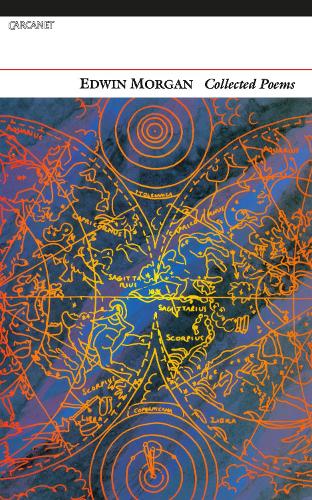
Collected Poems - Poetry Pleiade
paperback
Published:
29 February, 1996

Popular Books by Edwin Morgan
View All Books by Edwin Morgan
Description
More Details
| Type | Book |
|---|---|
| ISBN13 | 9781857541885 |
| ISBN10 | 185754188X |
| Number Of Pages | 608 |
| Item Weight | 655 g |
| Publisher / Reseller | Carcanet Press Ltd |
| Format | paperback |
| Edition | New edition |
Media Reviews
Edwin Morgan is a poet with experience of laureateship: he was made Glasgow's first poet laureate in the autumn of 1999. Born in that city in 1920, Morgan's work is often considered alongside that of other Scottish Modernists such as Norman MacCaig, George Makay Brown, Iain Crichton Smith and Sorley MacLean.
What kind of a poet is he? A hard question to answer with simplicity, because his interests and techniques, over the years have been remarkably varied.
His Collected Poems, published by Carcanet in 1990, shows the range and scope of his work. In the 1960s he began to experiment with Concrete Poetry, where the typographic style, visual effect or the sound of the poem is as important as the words that make up the verse, the best known examples are probably 'The Computer's First Christmas Card' which begins:
Jollymerry
hollyberry
jollyberry
And The Loch Ness Monster's Song?
Sssnnwhufffll?
Hnwhufflhhnnwfl hnfl hfl?
His interest in technology can be seen in volumes such as Instamatic Poems (1972) and From the Video Box (1986); both books address the interaction between the word, the image and the intermediaries we can use to convey those words and images.
He was in the vanguard of Scots who began to address their urban landscape; his volume From Glasgow to Saturn appeared in 1973, eight years before Alasdair Gray's emblematic novel, Lanark. His experimentalism comes out of the solid ground of an understanding of poetic tradtion and form. He has written sonnets; he has imagined Lord Byron in the old age that the poet never reached; he has written librettos for opera and performed with the jazz saxophonist Tommy Smith.
Not for nothing, it would seem, is the Centre for Creative Writing at the Universities of Glasgow and Strathclyde named after him. Not only has he translated poetry out of many languages - Russian, Hungraian, French, Italian, Portuguese, to name a few - his translations of classics into Scots have won him high praise; his version of Rostand's Cyrano de Bergerac appeared in 1992; his Phedre, after Racine, in 2000.
One might reasonably ask whether the Poet Laureate of the United Kingdom as a whole, Andrew Motion, need feel threatened by this appointment; certainly, it's true to say - and the poet himself would be the last to deny it - that Motion's work is rooted in a particularly English (rather than British) tradition. His critical work has focused on writers such as Philip Larkin and John Keats; the writers he most admires, he has said, are: Wordsworth, Edward Thomas and Larkin. Does this mean a narrow gaze? Not necessarily. It's worth nothing that it was as true of his most recent predecessors, Ted Hughes and John Betjeman. Art is strengthened by particularity and attention to detail; to range widely for the sheer sake of 'inclusiveness', would not necessarily be a virtue.
This appointment may be just another sign of devolution, but it is certainly a sign that there is room, in the literary and cultural landscape, for many voices. What does a Poet Laureate do? He or she addresses the nation through poetry; and speaks on behalf of poetry too. That there should be more powerful voices raised on behalf of art and what art can do for all of us, is surely no bad thing.
GoodReads Reviews
Author's Bio
Edwin Morgan was a professor of English at Glasgow University and retired in 1980. He has since been a visiting professor at Strathclyde University and at the University of Wales in Aberystwyth.