After Russia :The First Notebook
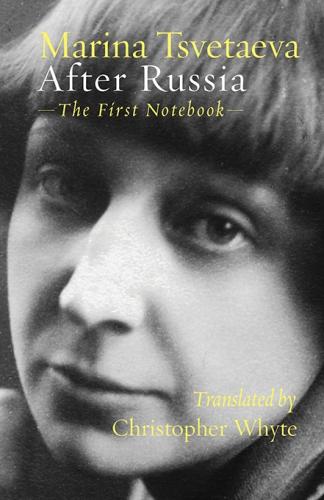
After Russia :The First Notebook
paperback | English
Published:
6 October, 2017

Popular Books by Marina Tsvetaeva
View All Books by Marina Tsvetaeva
Description
More Details
| Type | Book |
|---|---|
| ISBN13 | 9781848615496 |
| ISBN10 | 1848615493 |
| Number Of Pages | 142 |
| Item Weight | 191 g |
| Product Dimensions | 140 x 216 x 9 mm |
| Publisher / Reseller | Shearsman Books |
| Format | paperback |
Author's Bio
The life of Marina Tsvetaeva (1892-1941), now recognised as a major Russian and indeed European poet of the 20th century, was marked to an unusual extent by the political and ideological conflicts of her time. Born to a privileged background in Moscow, the revolutions of 1917 brought her crushing hardship and deprivation, but also ushered in a period of unparalleled creativity as poet and playwright. In 1922 she left for the west to rejoin her husband, who had fought with the counter-revolutionary forces. In 1925 the family moved from near Prague to Paris. Their existence was marked by appalling poverty and a growing alienation from the Russian emigre community. When in 1937 her husband was implicated in an assassination carried out by the Stalinist secret services, Tsvetaeva saw no alternative but to follow him back to the USSR. After the Nazis invaded Russia, she was evacuated to Yelabuga, where she took her own life in August 1941. The publication of well over 1,800 letters, as well as her diaries and notebooks, has revealed her to be a thinker of quite exceptional daring and philosophical profundity. Christopher Whyte (1952-) is a poet in Scottish Gaelic, a novelist in English, and the translator into English of Rilke, Pasolini and Tsvetaeva. After pursuing a distinguished academic career in Italy and Scotland, researching and teaching Scottish and Gaelic literature, he took early retirement in 2005 and moved to Budapest, Hungary where he now writes full-time.