Journey to the End of the Night
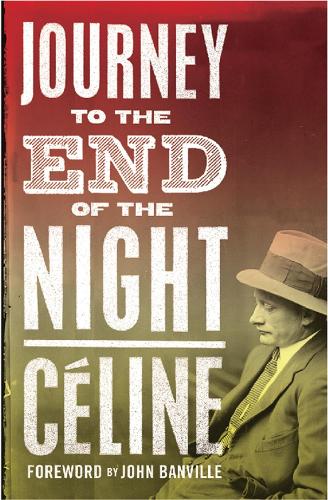
Journey to the End of the Night
paperback | English
Published:
29 September, 2012

Popular Books by Louis-Ferdinand Celine
View All Books by Louis-Ferdinand Celine

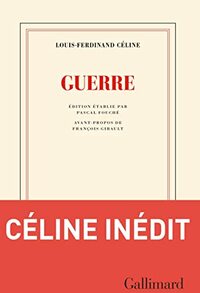
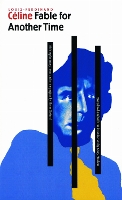
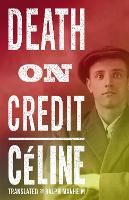
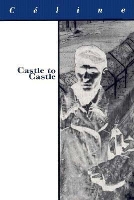
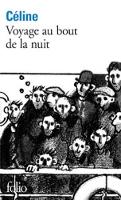
Description
More Details
| Type | Book |
|---|---|
| ISBN13 | 9781847492401 |
| ISBN10 | 1847492401 |
| Number Of Pages | 432 |
| Item Weight | 333 g |
| Product Dimensions | 128 x 194 x 26 mm |
| Publisher / Reseller | Alma Books Ltd |
| Format | paperback |
Media Reviews
Journey to the End of the Night, first published in 1932, is one of the greatest novels of the 20th century... It could be said that without Céline there would have been no Henry Miller, no Jack Kerouac, no Charles Bukowski, no Beat poets. -- John Banville
The blackest comedies can baffle readers not trained, or just unwilling, to recognise the comic in human extremis. It's obscene, rock-bottom laughter, disabused of all idealism, that provides the tonic Céline speaks of. -- Howard Jacobson * The Guardian *
My favourite French classic has to be Journey to the End of the Night by Louis-Ferdinand Céline. It's an epic that takes you all around the world, but the centre of the world is Paris, or Céline's delirious, slightly hallucinatory, incredibly poetic vision of it. -- Andrew Hussey * The Guardian *
Céline’s expletive-laden, first-person narration influenced Henry Miller, Charles Bukowski and Beat poetry. But the influences do not stop there: one cannot help but appreciate the palpable influence that the author's anti-war invective and defence of cowardice had on Joseph Heller's Yossarian and Kurt Vonnegut's Billy Pilgrim respectively. But, the interest of those he influenced aside, Céline’s novel remains as readable and vital today as it was in the 1930s. * TLS *
Born in the shadow of entrenched realism and naturalism, Céline ripped up the textbook. He wasn't the first French writer to use a colloquial style, but he was the first to use it so relentlessly and powerfully, to create a brand, the rant, whether it was delirious, lyrical or raging. -- Tibor Fischer * The Guardian *
GoodReads Reviews
Author's Bio
LOUIS-FERDINAND CÉLINE (1894–1961) was one of the most controversial authors of the twentieth century, a writer who mixed realism with imaginative fantasy, and, like his contemporary Henry Miller, an iconoclast who shocked many of his readers. His experiences as a soldier during the First World War and as a physician treating the poor in the suburbs of Paris gave him a jaundiced view of humanity, which he poured into a unique style of prose that is at the same time blackly humorous, daring and unsettling.