
1.09Kg of CO2

136 litre(s) of Water

0.0082 Tree(s)

1 book donated to global literacy projects
How Bad Are Bananas? :The carbon footprint of everything
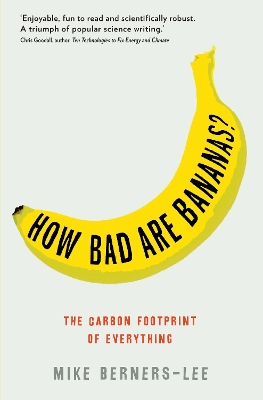
How Bad Are Bananas? :The carbon footprint of everything
paperback
Published:
13 May, 2010


Popular Books by Mike Berners-Lee
View All Books by Mike Berners-Lee



Description
More Details
| Type | Book |
|---|---|
| ISBN13 | 9781846688911 |
| ISBN10 | 1846688914 |
| Number Of Pages | 272 |
| Item Weight | 285 g |
| Product Dimensions | 129 x 198 x 18 mm |
| Publisher / Reseller | Profile Books Ltd |
| Format | paperback |
| Edition | Main |
Media Reviews
It is terrific. I can't remember the last time I read a book that was more fascinating and useful and enjoyable all at the same time. -- Bill Bryson
an engaging book that manages to present serious science without preaching.It offers tools that any reader will be able to use and make informed choices, and even seasoned eco-enthusiasts will be in for plenty of surprises * New Scientist *
Mike Berners-Lee knows more about carbon footprints than anyone else in the UK. Enjoyable, fun to read and scientifically robust. A triumph of popular science writing -- Chris Goodall.
If we're serious about really addressing climate change, we need to become energy and carbon literate, and get to grips with the implications not only of our choices but also the bigger infrastructures which underpin the things we consume. How can we educate our desires unless we know what we're choosing between? Mike Berners Lee, to my complete delight, has provided just the wonderful foundation we need - a book that somehow made me laugh while telling me deeply serious things. -- Peter Lipman, Director of SUSTRANS
This book is amazing. I was either going "wow" or snorting with laughter. -- Rachel Nunn, Director, Carbon Neutral Stirling
Curiously fascinating to both climate geeks and well-rounded human beings alike. -- Franny Armstrong, Director of The Age of Stupid and founder of 10:10
Author's Bio
MIKE BERNERS-LEE is the founding director of an associate company of Lancaster University which specialises in organisational responses to climate change.