Popular Books by Tom Nancollas
View All Books by Tom Nancollas
Seashaken Houses: A Lighthouse History from Eddystone to Fastnet
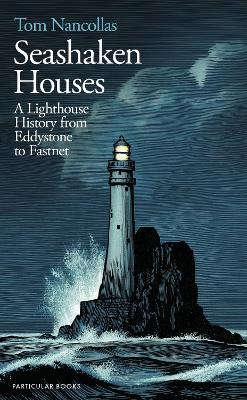
Seashaken Houses: A Lighthouse History from Eddystone to Fastnet
hardback | English
Published:
4 October, 2018
hardback | English
Published:
4 October, 2018
Description
Lighthouses are striking totems of our relationship to the sea. For many, they encapsulate a romantic vision of solitary homes amongst the waves, but their original purpose was much more utilitarian than that. Today we still depend upon their guiding lights for the safe passage of ships. Nowhere is this truer than in the rock lighthouses of Great Britain and Ireland which form a ring of twenty towers built between 1811 and 1904, so-called because they were constructed on desolate rock formations in the middle of the sea, and made of granite to withstand the power of its waves. Seashaken Houses is a lyrical exploration of these singular towers, the people who risked their lives building and rebuilding them, those that inhabited their circular rooms, and the ways in which we value emblems of our history in a changing world.
More Details
| Type | Book |
|---|---|
| ISBN13 | 9781846149375 |
| ISBN10 | 1846149371 |
| Number Of Pages | 256 |
| Item Weight | 360 g |
| Product Dimensions | 142 x 24 x 222 mm |
| Publisher / Reseller | Particular Books |
| Format | hardback |
| Edition | 1st Edition |
See More +
Media Reviews
With compelling narrative and fascinating historical anecdotes, Tom shines a spotlight on these little known but spectacular structures -- Roma Agrawal
GoodReads Reviews
Author's Bio
Born in Gloucester in 1988, Tom Nancollas is a writer and building conservationist based in London. After university, he joined English Heritage to work on church repair grants before moving on to the City of London and its historic townscape. Of Cornish ancestry, Tom maintained a love of seascapes during his work in the capital and became fascinated with offshore rock lighthouses, finding in them a new way of looking at buildings, heritage and, unexpectedly, family.