Nightingale Wood - Virago Modern Classics
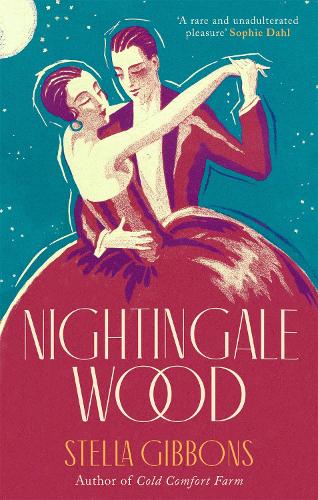
Nightingale Wood - Virago Modern Classics
paperback
Published:
2 April, 2009

Popular Books by Stella Gibbons
View All Books by Stella Gibbons
Description
'Gibbons is superb on middle class life' SAM JORDISON, GUARDIAN
'A sharp-edged romantic comedy, we have a chance to see what we've been missing' DAILY MAIL
'What luxury to stumble upon this quirky book, and the fascinating modern woman who wrote it' SOPHIE DAHL
Life is not quite a fairytale for poor Viola. Left penniless, the young widow is forced to live with her late husband's family in a joyless old house. There's Mr Wither, a tyrannical old miser, Mrs Wither, who thinks Viola is just a common shop girl and two unlovely sisters-in-law, one of whom is in love with the chauffeur.
Only the prospect of the charity ball can raise Viola's spirits - especially as Victor Spring, the local prince charming will be there. But Victor's intentions towards our Cinderella are, in short, not quite honourable . . .
More Details
| Type | Book |
|---|---|
| ISBN13 | 9781844085729 |
| ISBN10 | 1844085724 |
| Number Of Pages | 400 |
| Item Weight | 276 g |
| Product Dimensions | 127 x 197 x 26 mm |
| Publisher / Reseller | Little, Brown Book Group |
| Format | paperback |
Media Reviews
Gibbons's heroines are plucky, determined and quietly hedonistic. But she can do melancholy with the best of them, too, not to mention melodrama * Guardian *
What luxury to stumble upon this quirky book, and the fascinating modern woman who wrote it. It is a rare unadulterated pleasure and high time for its encore -- Sophie Dahl
Nightingale Wood is very impressive . . . Gibbons is superb on middle class life in the years immediately before the second world war, on the erosions of class division and ongoing snobbery . . . relying on icicle wit and sharp observation to lambast conventional morality. Gibbons also displays a tender side. There is real sadness in some of her characters, instead of deliberately heightened rural dolour - and it winds up as a love story that would please Jane Austen . . . I've loved every minute -- Sam Jordison * Guardian *
A sharp-edged romantic comedy, we have a chance to see what we've been missing * Daily Mail *
Gibbons's heroines are plucky, determined and quietly hedonistic. But she can do melancholy with the best of them, too, not to mention melodrama * Guardian *
What luxury to stumble upon this quirky book, and the fascinating modern woman who wrote it. It is a rare unadulterated pleasure and high time for its encore
Nightingale Wood is very impressive . . . Gibbons is superb on middle class life in the years immediately before the second world war, on the erosions of class division and ongoing snobbery . . . relying on icicle wit and sharp observation to lambast conventional morality. Gibbons also displays a tender side. There is real sadness in some of her characters, instead of deliberately heightened rural dolour - and it winds up as a love story that would please Jane Austen . . . I've loved every minute * Guardian *
NIGHTINGALE WOOD is in essence, a sprawling, delightful, eccentric fairy tale . . . There is romance galore, a transformative dress, and a ball, much dizzy kissing in hedgerows and beyond, spying, retribution and runaways, fights and a fire, poetry and heartbreak, a few weddings AND funerals, and a fairytale ending with a twist. What luxury to stumble upon this quirky book, and the fascinating modern woman who wrote it. It is a rare unadulterated pleasure and high time for its encore * Sophie Dahl *
Author's Bio
Stella Dorothea Gibbons (1902-1989) was born in London. She studied journalism at University College, London and worked for ten years on various papers, including the Evening Standard. She married the actor and singer Allan Webb. They had one daughter.
Gibbons is the author of twenty-five novels, three volumes of short stories, and four volumes of poetry. Her first novel Cold Comfort Farm (1932) was an immediate success and won the Femina Vie Heureuse Prize for 1933. Among her works are Nightingale Wood (1938), The Bachelor (1944), Westwood (1946) and Starlight (1967). She was elected a Fellow of the Royal Society of Literature in 1950.