The Destruction of Reason
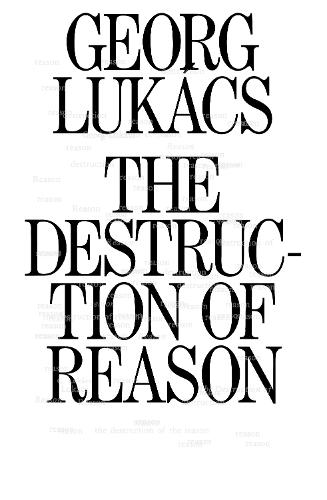
The Destruction of Reason
paperback
Published:
31 August, 2021
paperback
Published:
31 August, 2021

Standard worldwide delivery by
Fri, June 19 - Wed, June 24
Order within
0
Popular Books by Georg Lukacs
View All Books by Georg Lukacs
Description
A classic of Western Marxism, The Destruction of Reason is Georg Lukács's trenchant criticism of German philosophy after Marx and the role it played in the rise of National Socialism. Originally published in 1952, the book is a sustained and detailed polemic against post-Hegelian German philosophy and sociology from Kierkegaard to Heidegger. The Destruction of Reason is unsparing in its contention that with almost no exceptions, the post-Hegelian tradition prepared the ground fascist thought. In this, the main culprits are Friedrich Nietzsche and Martín Heidegger who are accused, in turn, of introducing irrationalism into social and philosophical thought, pronounced antagonism to the idea of progress in history, an aristocratic view of the "masses," and, consequently, hostility to socialism, which in its classic expressions are movements for popular democracy-especially, but not exclusively, the expropriation of most private property in terms of material production.
The Destruction of Reason remains one of Lukács's most controversial, albeit little read, books. This new edition, featuring an historical introduction by Enzo Traverso, will finally see this classic come back in to print.
The Destruction of Reason remains one of Lukács's most controversial, albeit little read, books. This new edition, featuring an historical introduction by Enzo Traverso, will finally see this classic come back in to print.
More Details
| Type | Book |
|---|---|
| ISBN13 | 9781839761843 |
| ISBN10 | 1839761849 |
| Number Of Pages | 928 |
| Item Weight | 2470 g |
| Product Dimensions | 153 x 234 x 53 mm |
| Publisher / Reseller | Verso Books |
| Format | paperback |
See More +
Media Reviews
[Lukacs possessed] a very specific and important kind of mind, raised to an extraordinary degree of interest by its quite exceptional ability. -- Raymond Williams
Author's Bio
Georg Lukács (1885-1971) was a Hungarian Marxist philosopher and literary critic. Most scholars consider him to be the founder of the tradition of Western Marxism. He contributed the ideas of reification and class consciousness to Marxist philosophy and theory, and his literary criticism was influential in thinking about realism and about the novel as a literary genre. He served briefly as Hungary's Minister of Culture following the 1956 Hungarian Revolution.