Weather Science :How Meteorology Has Gone from Folklore to High-Tech
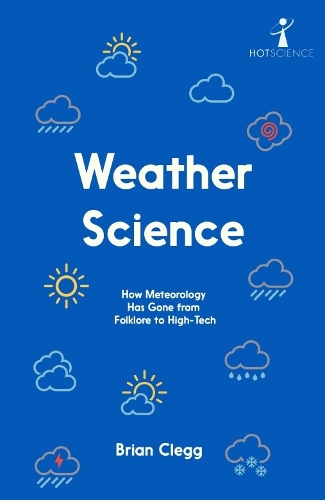
Weather Science :How Meteorology Has Gone from Folklore to High-Tech
paperback
Published:
18 July, 2024

Popular Books by Brian Clegg
View All Books by Brian Clegg




Description
Everyone has an interest in the weather, whether it's to check the prospects for a day out or to know when best to harvest a crop. The Earth's weather systems also provide some of the most dramatic forces of nature, from the vast release of energy in a lightning flash to the devastating impact of tornadoes and hurricanes.
For centuries, our only real guide to future weather was folklore, but with the introduction of the first weather forecasts and maps in Victorian times, attempts were made to give some warning of the weather to come. Until relatively recently, these forecasts could be wildly inaccurate - think of Michael Fish's denial that there was a storm on the way the night before the UK's great storm of 1987. This was due to the mathematically chaotic nature of weather systems, first discovered in the 1960s, the understanding of which would transform forecasting from the 1990s and mean that meteorologists became some of the foremost users of supercomputers.
From the crystalline perfection of the snowflake to the transfer of energy from the Sun, science lies at the heart of the weather and our understanding of it. In recent years, weather science has moved to the leading edge with advanced modelling, versatile use of satellite data and a better understanding of mathematical chaos. This is a true example of hot science at work.
More Details
| Type | Book |
|---|---|
| ISBN13 | 9781837731534 |
| ISBN10 | 1837731535 |
| Number Of Pages | 192 |
| Item Weight | 1000 g |
| Publisher / Reseller | Icon Books |
| Format | paperback |
Author's Bio
Brian Clegg is a popular science writer whose Dice World and A Brief History of Infinity were both longlisted for the Royal Society Prize for Science Books. He has written for publications including Nature, The Times and BBC Focus.