St. Paul :A Screenplay
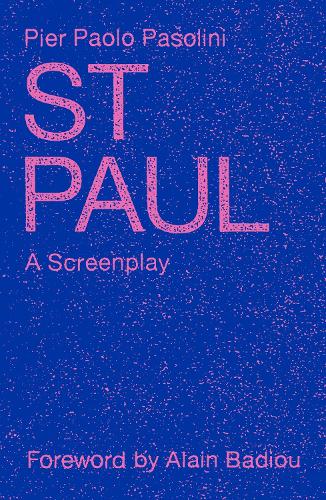
St. Paul :A Screenplay
paperback
Published:
28 October, 2025

Popular Books by Pier Paolo Pasolini
View All Books by Pier Paolo Pasolini
Description
This is a key addition to the growing debate around St Paul and to the proliferation of literature centred on the current turn to religion in philosophy and critical theory, which embraces contemporary figures such as Alain Badiou, Slavoj Zizek and Giorgio Agamben.
More Details
| Type | Book |
|---|---|
| ISBN13 | 9781836740384 |
| ISBN10 | 1836740387 |
| Number Of Pages | 192 |
| Item Weight | 159 g |
| Product Dimensions | 129 x 198 x 12 mm |
| Publisher / Reseller | Verso Books |
| Format | paperback |
Media Reviews
Pasolini seems to me indisputably the most remarkable figure to have emerged in Italian arts and letters since the Second World War ... His poetry is an important part of his passionate, proud, historically vulnerable body of work, a work in and with history; and of the tragic itinerary of his sensibility. -- Susan Sontag
Pasolini was what can be termed a citizen-poet. He was concerned with his homeland and expressed his feelings in his work. Patriotic poetry usually comes out of a right-wing tradition and is nationalistic, but Pasolini's great originality was to be a citizen-poet of the left ... He wept over the ruins of Italy but without a hint of rhetoric. He was a modern who used the classical tradition. Rimbaud, the poet of the Paris Commune, the most revolutionary of poets, remained his greatest influence. In the years after the Mussolini dictatorship, he adhered, like many of his compatriots, to an unorthodox brand of communism, that was both Christian and utopian, and these feelings for the poor and underprivileged motivated his own poetry and films. -- Alberto Moravia * New York Times *
GoodReads Reviews
Author's Bio
Pier Paolo Pasolini (1922-75) was an Italian film director, poet, writer and one of the most controversial and provocative intellectuals of his time. He worked together with Mauro Bolognini, Bernardo Bertolucci and Franco Rossi. Mostly known for his first and last films, Accattone and Salò, as well as The Gospel According to St. Matthew and Decameron, he was also a prolific essayist and activist. He was murdered in 1975.